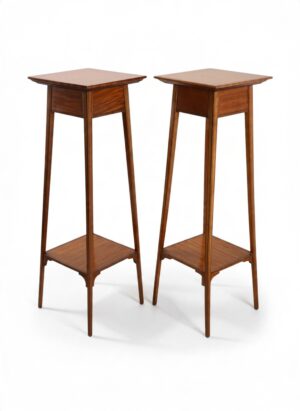
A French side table is a small occasional table made in France for use beside a chair or sofa, against a wall or between windows. The term covers a range of forms, including the small table en chiffonnière with its tiers and drawers, the bouillotte table with a marble top and pierced gallery, the guéridon on a central column, and simple provincial tables with a single frieze drawer.
Small tables were produced in great variety in eighteenth-century France, when the fashion for intimate rooms encouraged furniture for writing, sewing, taking coffee, holding candles and playing games. Louis XV examples typically have cabriole legs, shaped aprons and marquetry tops, while Louis XVI tables are rectilinear, with tapering fluted legs, gilt bronze mouldings and often marble tops surrounded by a pierced brass gallery. Empire and Restoration side tables were frequently made in mahogany or pale woods, and provincial makers used walnut, cherry and oak. Many fine side tables were reproduced in the nineteenth century, and buyers should look at construction, wear and mounts to distinguish period from later work. Original marble tops, unaltered drawers and good colour add to their appeal. Easy to place and useful everywhere, a French side table brings lightness and refinement to a sitting room, bedroom or hall.