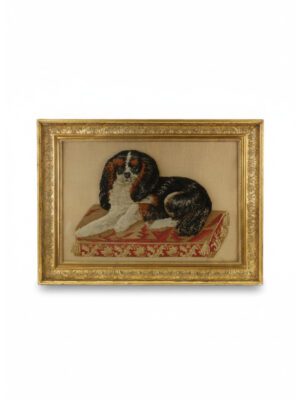















A French tapestry is a woven textile made in France in which the design is created by coloured weft threads, usually of wool and silk, worked by hand on a loom so that the picture forms part of the fabric itself. Tapestries were used as wall hangings, providing warmth and a portable form of decoration, and they also served as covers for chairs, sofas and screens.
France had several great centres of tapestry weaving. The Gobelins manufactory in Paris became the royal workshop under Louis XIV in the 1660s, producing magnificent sets for the king's palaces and as diplomatic gifts, and the Beauvais manufactory, founded at about the same time, became especially known for lighter decorative subjects and furniture covers. Aubusson in central France, together with nearby Felletin, produced tapestries and later carpets for a wider market, including the verdures, or foliage tapestries, that are often found today. Typical subjects include mythological and biblical scenes, hunting scenes, pastoral landscapes, flowers and decorative borders. Collectors look at the fineness of the weave, the quality of design, the condition of the colours and whether the borders survive. Fading, holes, reweaving and later painted areas affect value. Large tapestries make dramatic wall hangings, while fragments are often made into cushions or panels.