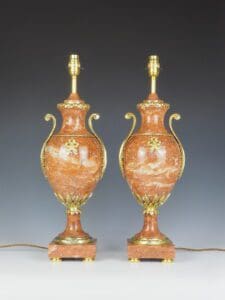










A Grand Tour marble is a sculpture or decorative object in marble bought in Italy by travellers on the Grand Tour, or made in that tradition. The term covers reduced copies of famous antique statues, busts of emperors and philosophers, urns, vases and tazzas, obelisks and columns, and specimen marble tabletops, as well as genuine ancient fragments, which were frequently restored and completed for the market.
In eighteenth-century Rome, sculptor-restorers such as Bartolomeo Cavaceppi supplied British collectors with antiquities whose missing heads and limbs had been skilfully replaced. Smaller souvenirs were produced in quantity: obelisks and columns veneered in coloured marbles such as giallo antico, rosso antico and verde antico, specimen tables inlaid with samples of ancient stones gathered from Roman sites, and alabaster vases and figures carved in Volterra and Florence. Collectors look for quality of carving, crisp detail and attractive colour, and check edges and inlays carefully, since marble chips easily and specimen tops may lose sections or crack. Old restorations are acceptable and often historically interesting, but crude modern repairs and resin reproductions should be avoided. Placed on a chimneypiece or pier table, or as a pair flanking a doorway, Grand Tour marbles introduce the cool, classical character long associated with the English country house.