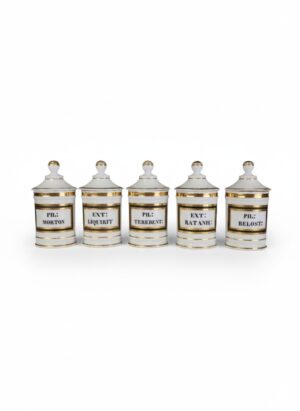
Hand painted china is pottery or porcelain tableware and ornament decorated with brushwork by hand rather than with transfer prints or decals. Painting may be done in underglaze blue before glazing, but most coloured decoration is applied in enamel colours over the glaze and fixed by a further firing, with gilding added and fired in the same way.
The tradition draws on Chinese and Japanese export porcelain, which inspired European factories from the early eighteenth century. Meissen, Sèvres, Chelsea, Derby and Worcester produced exceptionally fine painted wares, and Limoges in central France became a major centre for porcelain making and decorating in the nineteenth century, supplying both finished wares and blanks for independent decorators. Victorian and Edwardian amateurs also took up china painting as a fashionable pastime, so quality varies enormously. Signs of genuine hand painting include visible brushstrokes, slight differences between pieces in a set and enamel that sits in relief on the glaze. Printed decoration can be identified by fine dots or uniform outlines under a magnifying glass, though some wares combine a printed outline with hand colouring. Collectors look for skilled painting, a reliable factory mark, bright gilding and freedom from damage, and many enjoy using good antique hand painted china for special occasions.