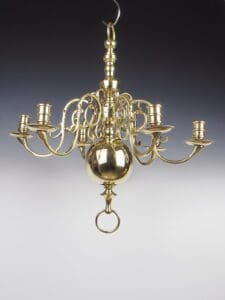
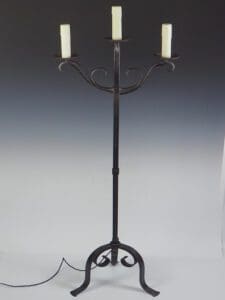
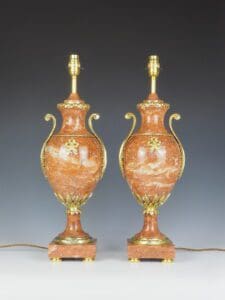
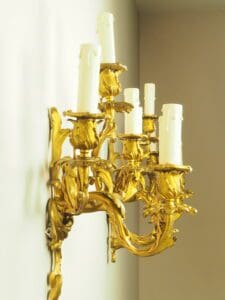




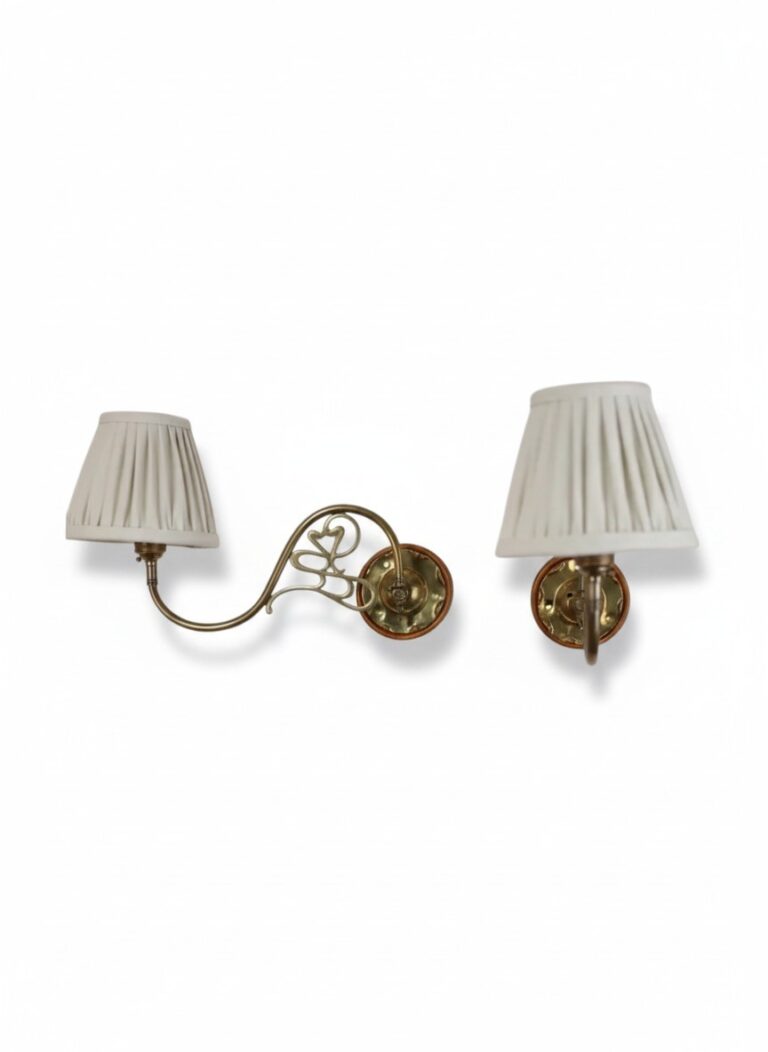




Identifying antique lighting means assessing a fitting's design, materials, construction, fuel source and later alterations to determine its age, origin and authenticity. Chandeliers, lanterns, wall lights, table lamps and candlesticks can all be dated by careful inspection, though many have been adapted over the years from candle, oil or gas to electricity.
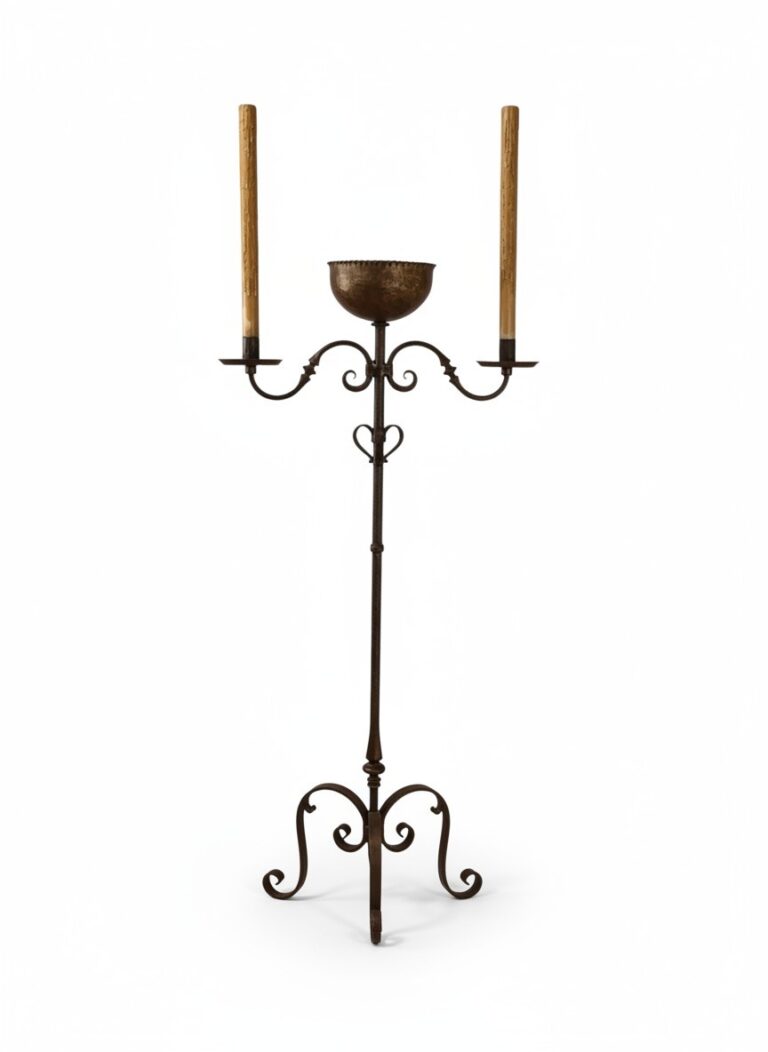
Begin with the original fuel. Candle fittings have sockets and drip pans, oil lamps have reservoirs and burners, often stamped with makers' names such as Hinks or with the name Duplex, and gas fittings have hollow arms with taps and gas jets. Electric conversion is usual, but look for wiring that has been neatly threaded through existing tubes rather than through new holes, and for original components retained rather than discarded. Period cast brass and bronze shows crisp chasing, hand finishing and screw threads of irregular pitch, while modern castings are often soft in detail and lighter in weight. Glass drops and shades should show the wear expected of hand-made glass. Consider whether arms, shades and canopies are matched or have been married from different fittings. Understanding the design vocabulary of the Georgian, Regency, Victorian, Edwardian and Art Deco periods helps place a fitting, and every converted piece should be checked and rewired by a qualified electrician.






