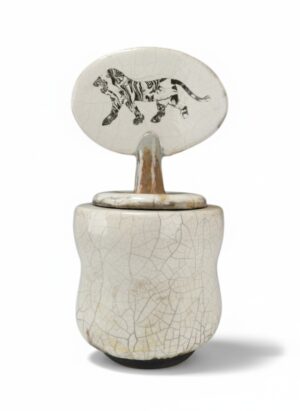








Jingdezhen porcelain is porcelain made in and around the city of Jingdezhen in Jiangxi province, south-eastern China, which has been the country's foremost centre of ceramic production for around a thousand years. Its position near deposits of kaolin and porcelain stone, abundant wood for fuel and river routes for transport made it ideal for large-scale manufacture of fine, white, translucent wares.
The town takes its name from the Jingde reign of the Song dynasty in the early eleventh century, and by the Yuan dynasty it was producing the underglaze cobalt blue-and-white porcelain for which it became famous. In the Ming dynasty imperial kilns were established there to supply the court, and the Qing dynasty brought technical brilliance under the Kangxi, Yongzheng and Qianlong emperors, including famille verte and famille rose enamels and refined monochrome glazes. Alongside imperial wares, Jingdezhen produced vast quantities of export porcelain for Europe, the Middle East and Asia, from Kraak ware to armorial services. Collectors look at the quality of potting and painting, the reign mark and whether it is period or apocryphal, and condition. Jingdezhen remains a working porcelain city today, so later and modern pieces are common and need careful judgement.