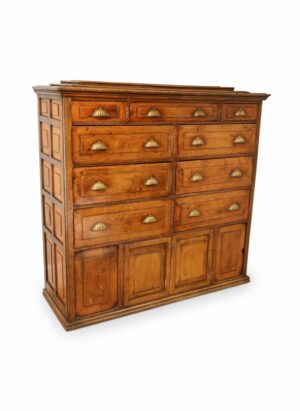











A kitchen dresser is a piece of furniture combining a base fitted with drawers, cupboards or an open pot board with a tall rack of open shelves above, used to store and display plates, jugs and other crockery. The upper shelves often have grooves or rails to stand plates upright, and hooks for hanging cups and jugs, while the base provides storage for linen, cutlery and utensils.
Dressers developed from simple side tables used for preparing or dressing food, and the familiar form with a shelved rack was established by the late seventeenth century, becoming the centrepiece of farmhouse and cottage kitchens through the eighteenth and nineteenth centuries. Regional types are a rich collecting field: Welsh dressers, often with pot boards and shaped friezes, are particularly admired, while Lancashire, Yorkshire and West Country dressers have their own characteristic proportions and details. Oak was the classic timber for better examples, with elm, ash and pine used for humbler pieces, many of them originally painted. Collectors look for a rack and base that genuinely belong together, original handles and backboards, good colour and an unstripped surface. In kitchens today an antique dresser provides generous storage and a natural home for displays of blue and white or country pottery.