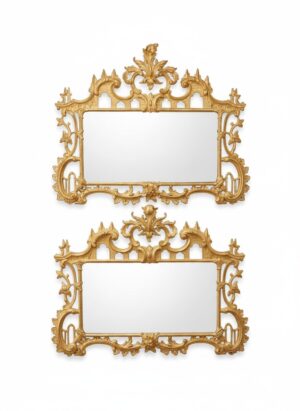
A mirror plate is the sheet of reflective glass set into a mirror frame. In antique mirrors the plate is important to both value and appearance, since original plates have a distinctive soft quality that is quite different from modern mirror glass.
Before the mid-nineteenth century mirror plates were silvered using an amalgam of tin and mercury, which produces a soft, slightly grey reflection and often develops characteristic speckling, clouding or crystallisation with age. Early English plates were made at Vauxhall and other glasshouses, and large plates were expensive, so many eighteenth-century mirrors combine several smaller plates. Mercury silvering was replaced by chemical silver deposition, first developed in the 1830s and widely used from the later nineteenth century. Antique plates are often bevelled by hand, with a shallow, soft-edged bevel quite different from the sharp machine bevels of later glass. Collectors check plates by holding a pointed object to the glass: on old, thinner glass the reflection appears close to the point. Original plates with some foxing are generally preferred to replacements, though replaced plates are common and acceptable if disclosed and appropriately aged in appearance.