A Parapet is a low wall built along the edge of a roof, terrace, balcony, bridge or other raised structure, serving both as a safety barrier and as an architectural finish. On buildings it rises above the line of the eaves, often concealing the roof behind it, and it may be plain, crenellated, pierced or formed as an open balustrade of turned or carved balusters.
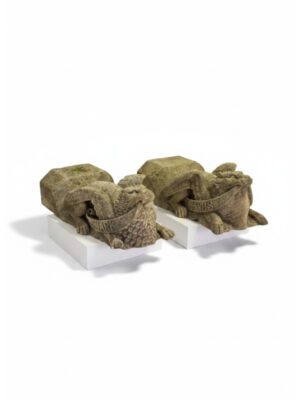
Parapets have a long history in fortified buildings, where battlemented parapets protected defenders, and crenellated parapets were later used decoratively on churches, Tudor houses and Gothic Revival buildings. In classical architecture the parapet was given a formal role, often topped with balustrading, urns, statues or a central pediment, as in many Palladian and Neoclassical country houses. In Georgian towns, particularly in London after early eighteenth-century building legislation aimed at reducing the spread of fire, terraces were commonly finished with brick or stone parapets that hid the roofs and gave a clean, horizontal skyline. Antique stone balusters, coping stones, parapet urns and finials salvaged from such buildings are much sought after today for use in gardens and on terraces, where weathered surfaces, lichen and good carving add greatly to their character.