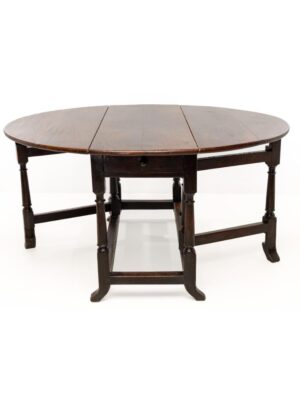








A Pembroke table is a small, light occasional table with a fixed central top and two short hinged drop leaves on either side, supported when raised by hinged wooden brackets that swing out from the frame. It usually has a drawer at one end, often with a matching false drawer at the other, and stands on four legs, sometimes ending in castors so that it can be moved easily.
The form became popular in England from around the 1760s, and its name is traditionally linked to a Countess of Pembroke, though the origin is uncertain. Thomas Sheraton described it as a table for a gentleman or lady to breakfast on, and it served for tea, writing, cards and informal meals. Early examples in mahogany have square or tapering legs, while later Georgian and Regency tables are often in satinwood or rosewood, with oval or serpentine tops, crossbanding, stringing or painted decoration, and some are raised on a central pedestal with splayed legs. Collectors value fine figured timber, good original colour, elegant proportions and original brackets, hinges and brass castors. The Pembroke table remains one of the most useful pieces of Georgian furniture, ideal as a side table, lamp table or occasional dining table in a small room.