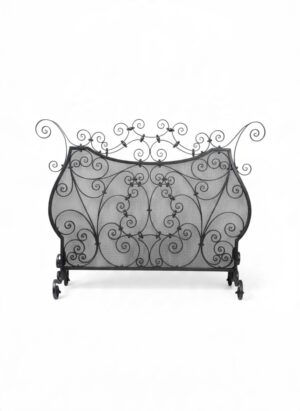
A screen is a movable panel or set of hinged panels used to divide a room, provide privacy, block draughts or shield people from the heat of a fire. Antique screens include tall folding screens with three, four, six or more leaves, as well as small pole screens and cheval screens designed for the fireside.
Folding screens originated in China and were later adopted in Japan, where painted paper and silk screens became a major art form. Chinese lacquered screens, including the incised Coromandel type, were exported to Europe from the seventeenth century and became highly fashionable, inspiring European imitations. English and French screens of the eighteenth and nineteenth centuries were often covered in tooled leather, needlework, painted canvas, silk or wallpaper, and Victorian households used screens decorated with scraps, prints and embroidery. Pole screens, with an adjustable panel on a slender stand, protected the complexion from the heat of the fire. Collectors examine the condition of panels and hinges, the originality of the covering and the quality of decoration. In modern interiors, a screen is useful for concealing awkward corners, dividing open-plan spaces or simply displaying a decorative surface.