£295.00
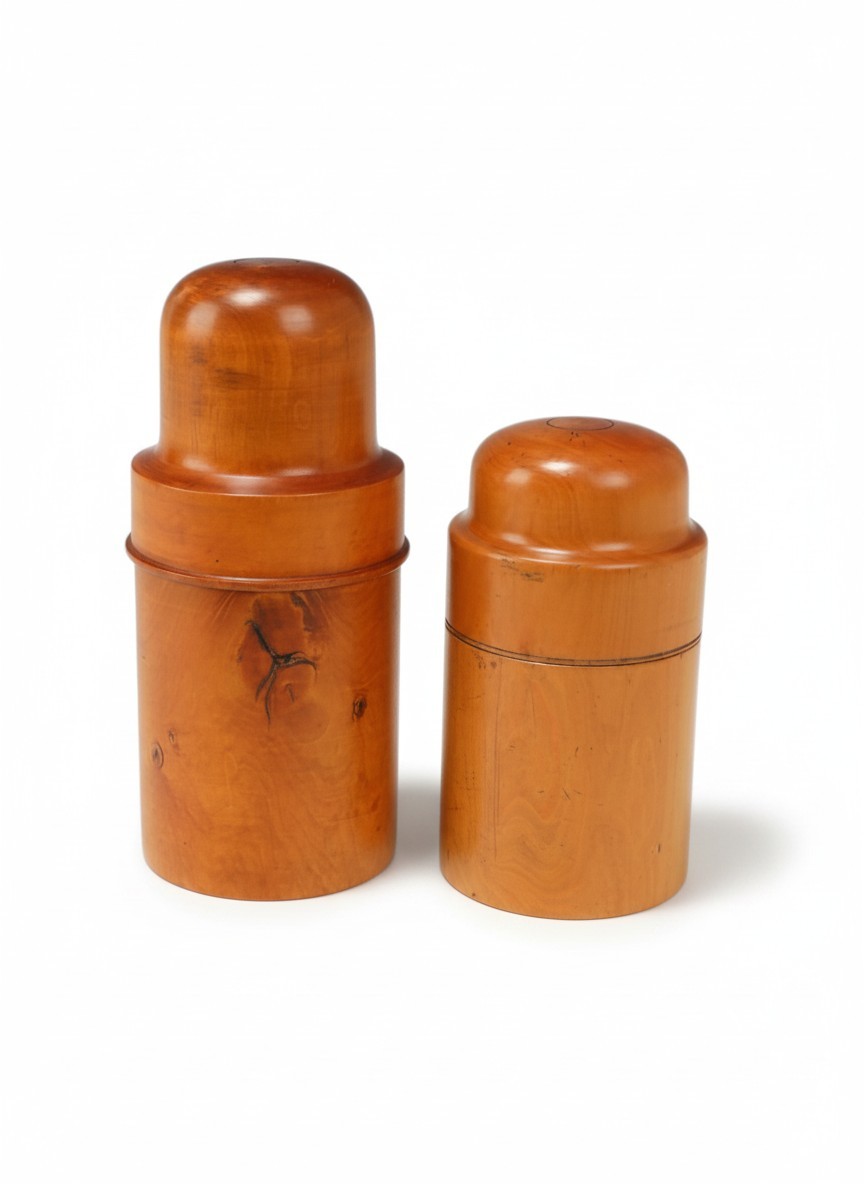
A fascinating pair of 19th-century English turned boxwood apothecary medicine bottle cases, originally made to protect glass medicine bottles used by chemists, apothecaries and doctors.



A fascinating pair of 19th-century English turned boxwood apothecary medicine bottle cases, originally made to protect glass medicine bottles used by chemists, apothecaries and doctors.
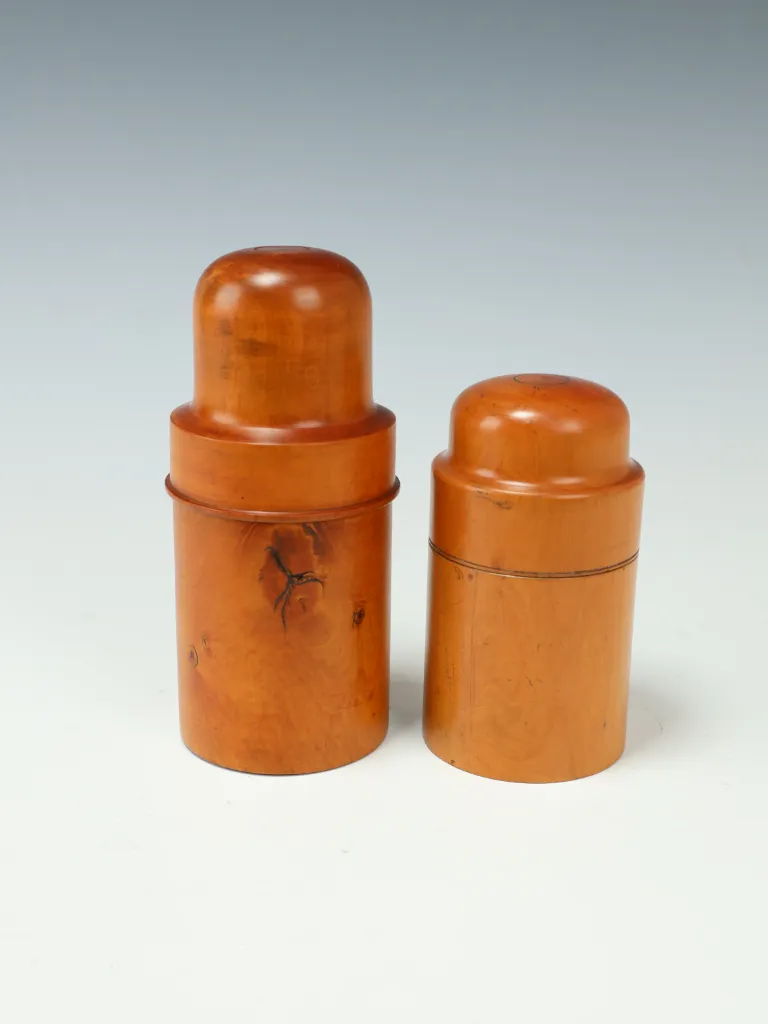
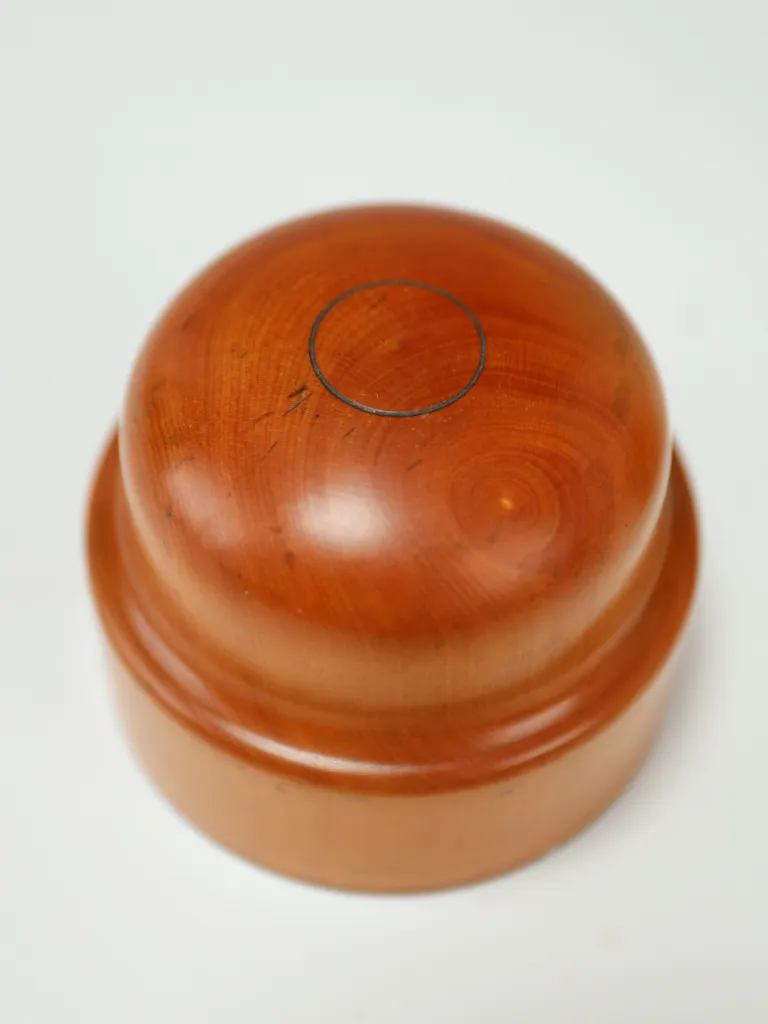
Dating to the mid-to-late Victorian period, the two cases are beautifully turned from dense boxwood and have developed a rich honey-coloured patina through age and handling. Their differing heights and subtly individual profiles make them particularly attractive displayed together.
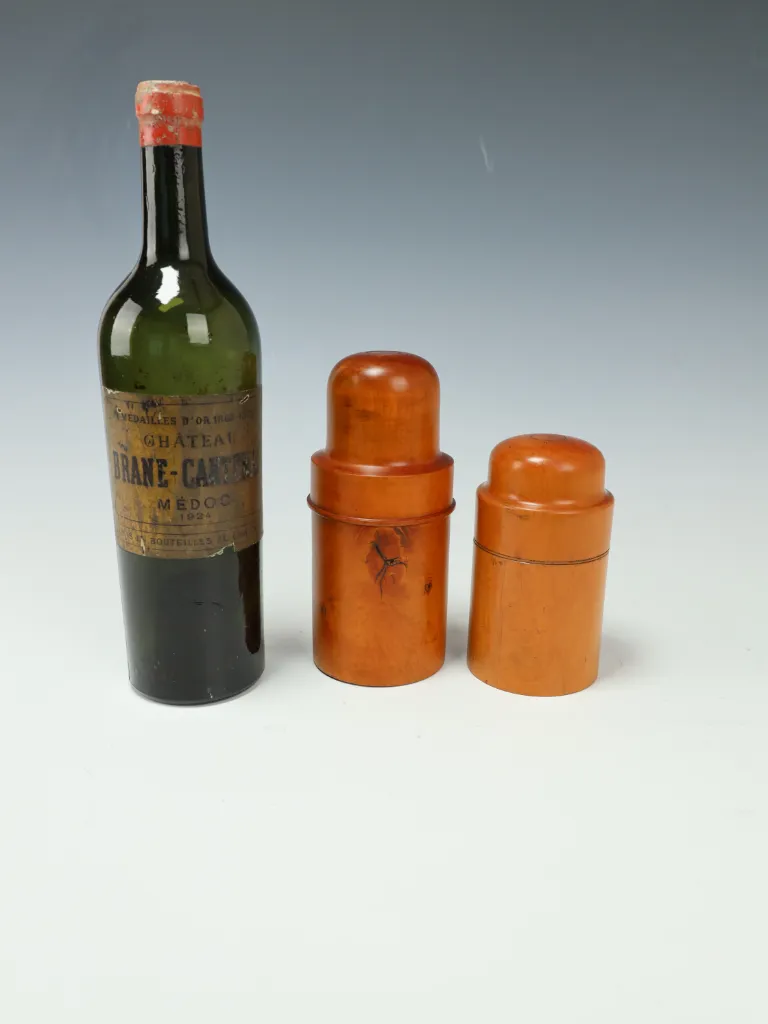
These cylindrical wooden cases were designed to house fragile glass medicine bottles, protecting them from breakage during storage and transportation. Surviving period examples are documented both with and without their original bottles, including examples associated with travelling medicine cases.
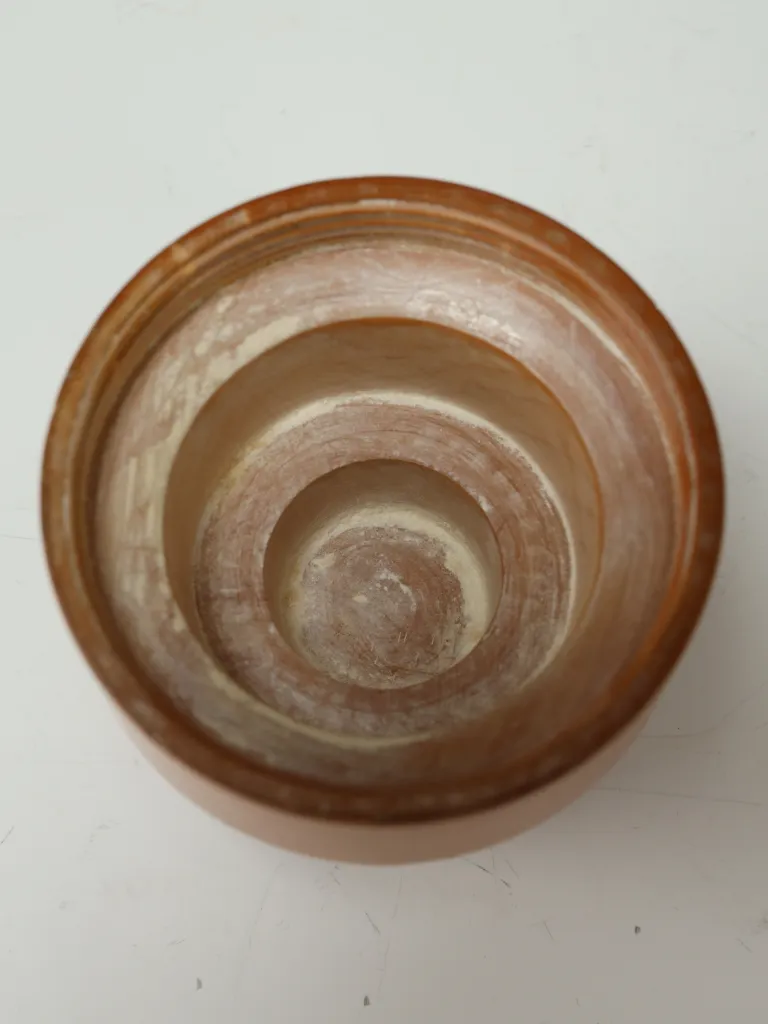
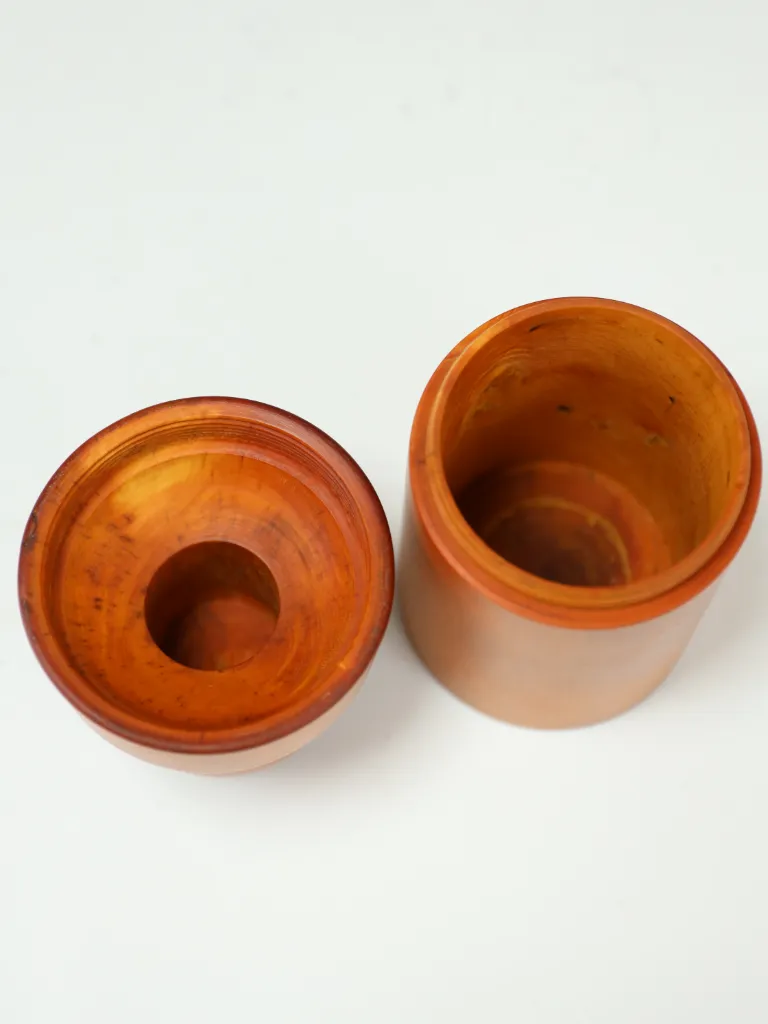
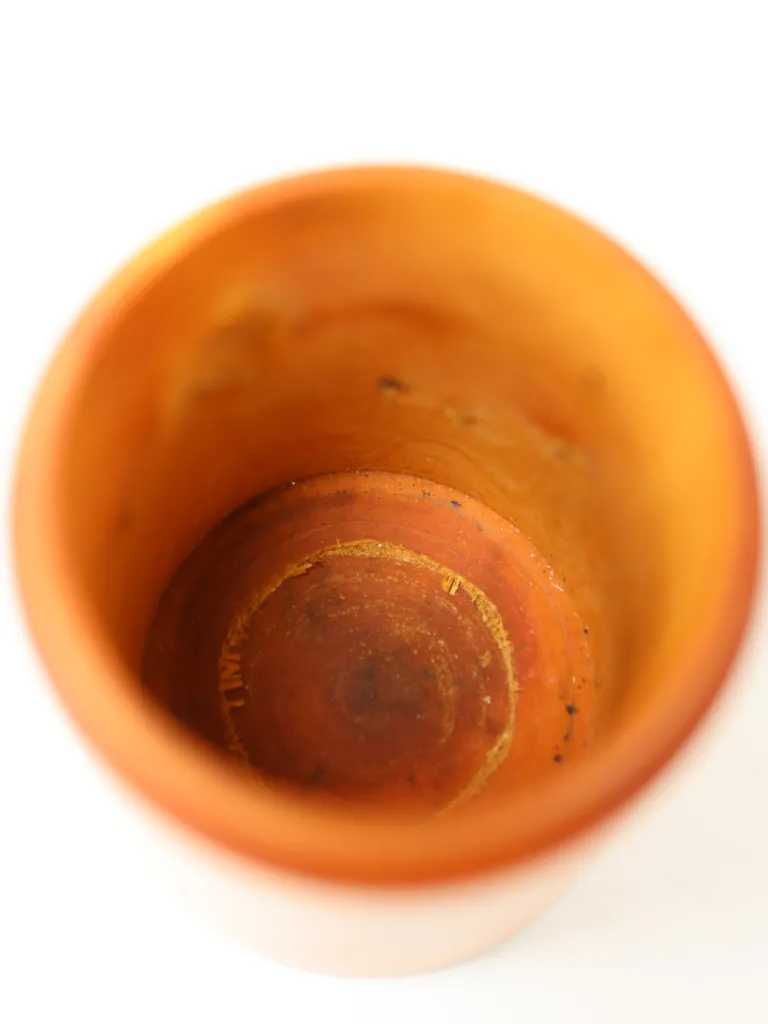
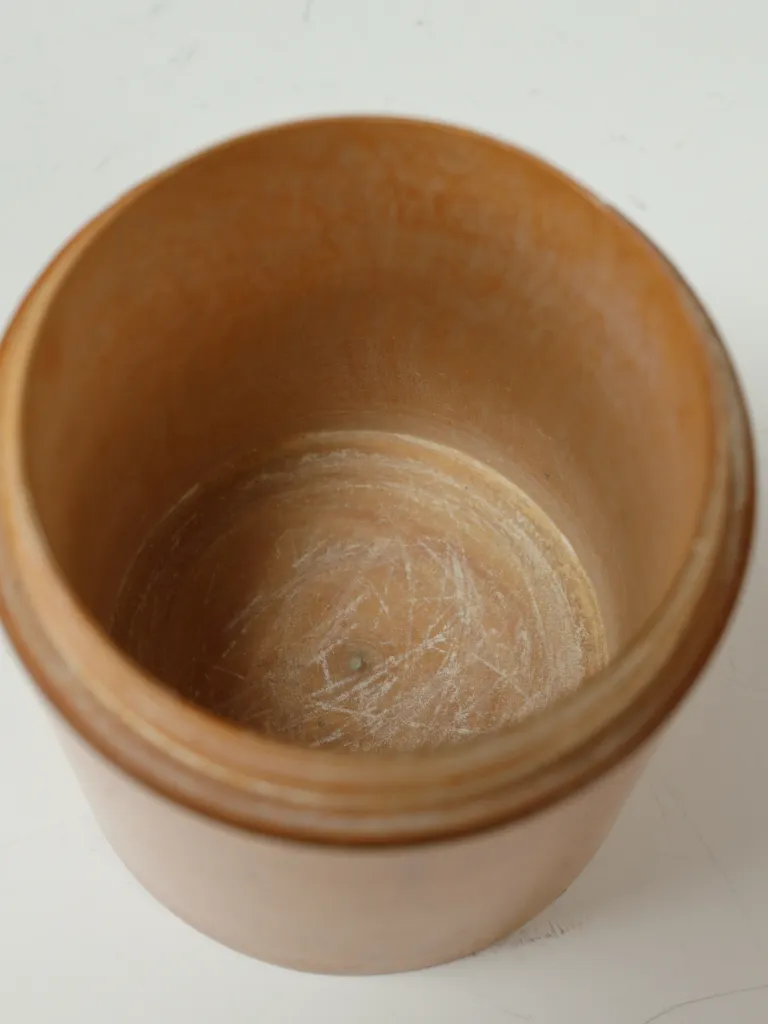
The original glass bottles from the present pair are now absent. Particularly interestingly, however, one case retains a pale silvery residue to its interior, suggesting that after the loss or removal of its bottle it may subsequently have been repurposed within a pharmacy for the silvering of medicinal pills.
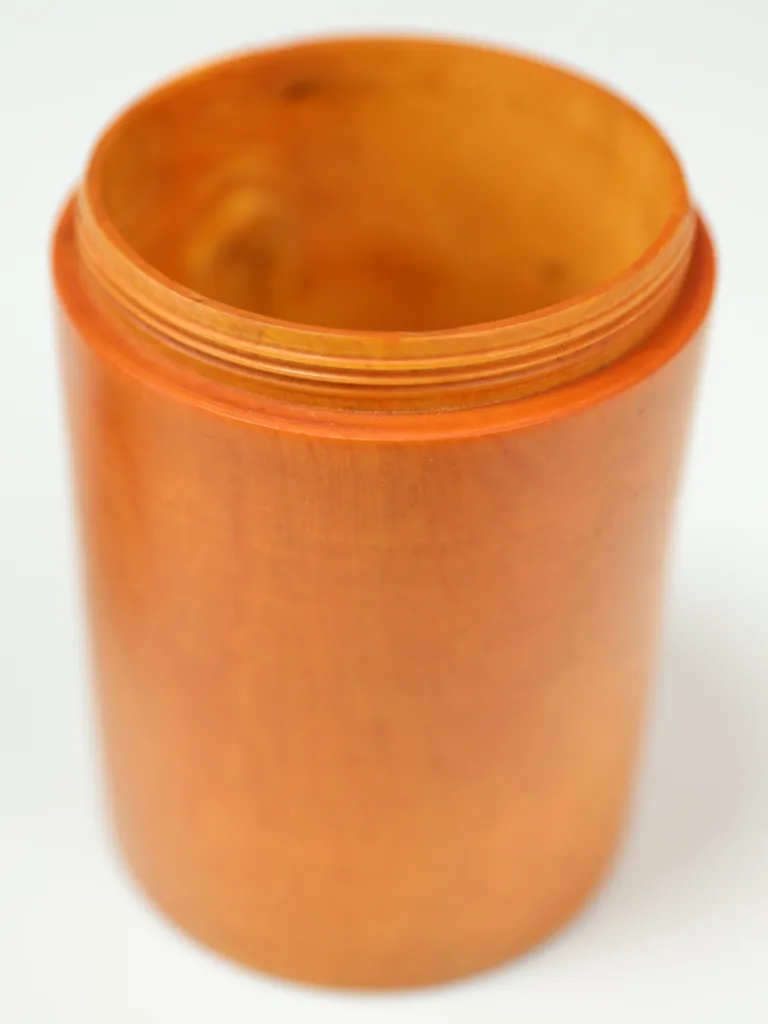
Both cases have been finely turned from boxwood, a dense, close-grained timber particularly well suited to the accurate turning required for pharmaceutical and scientific equipment.
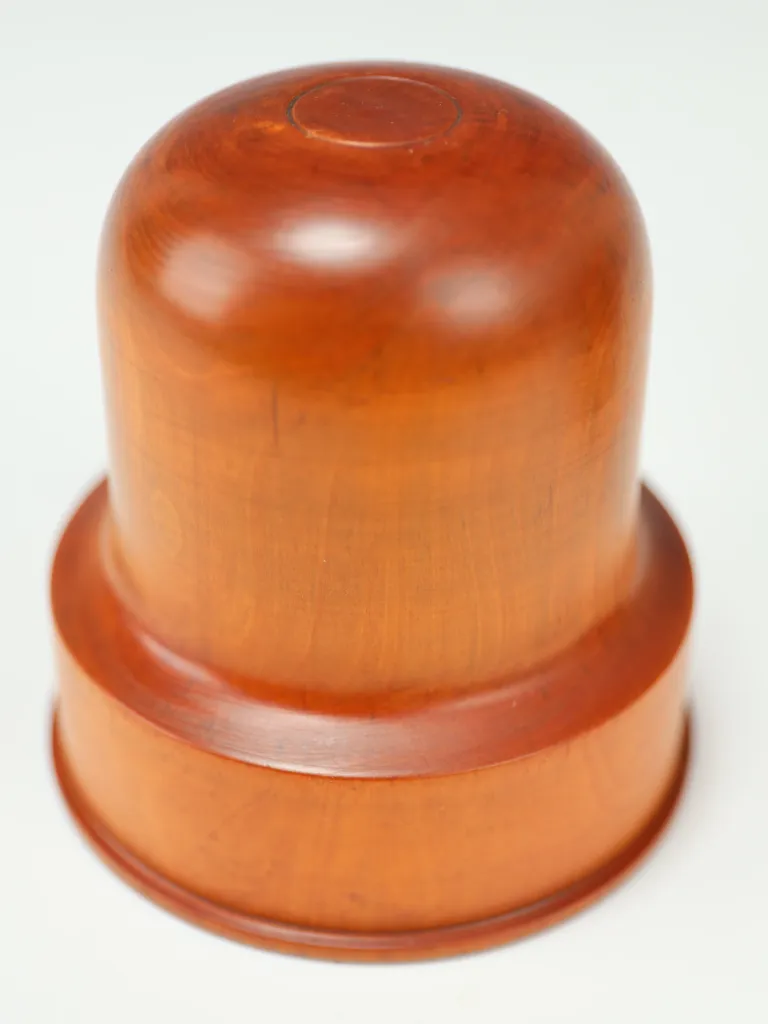
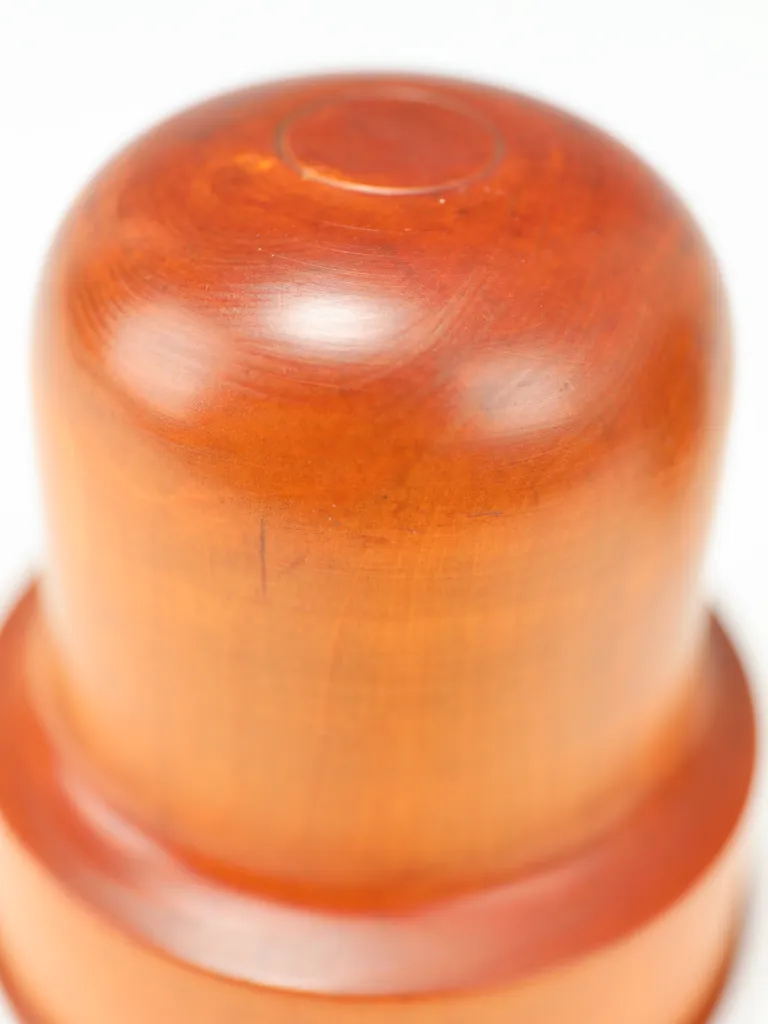
The larger example has a tall cylindrical body surmounted by a substantial domed upper section, separated by finely turned moulded bands.
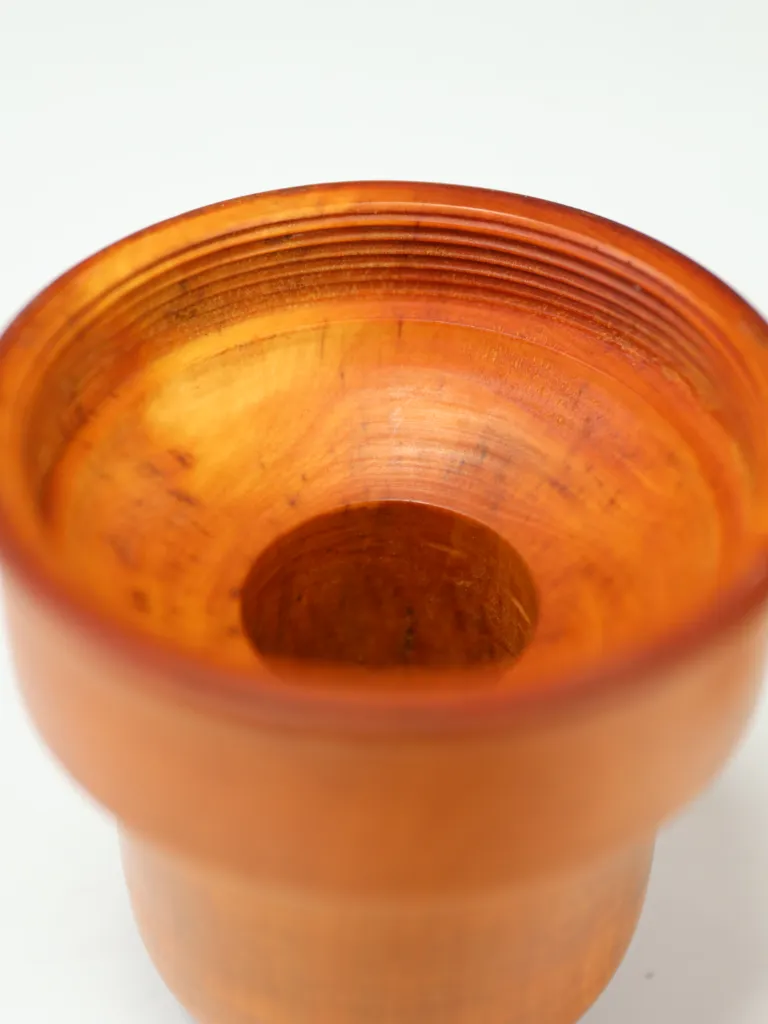
The smaller case follows the same general form but has a lower rounded dome and more restrained profile.
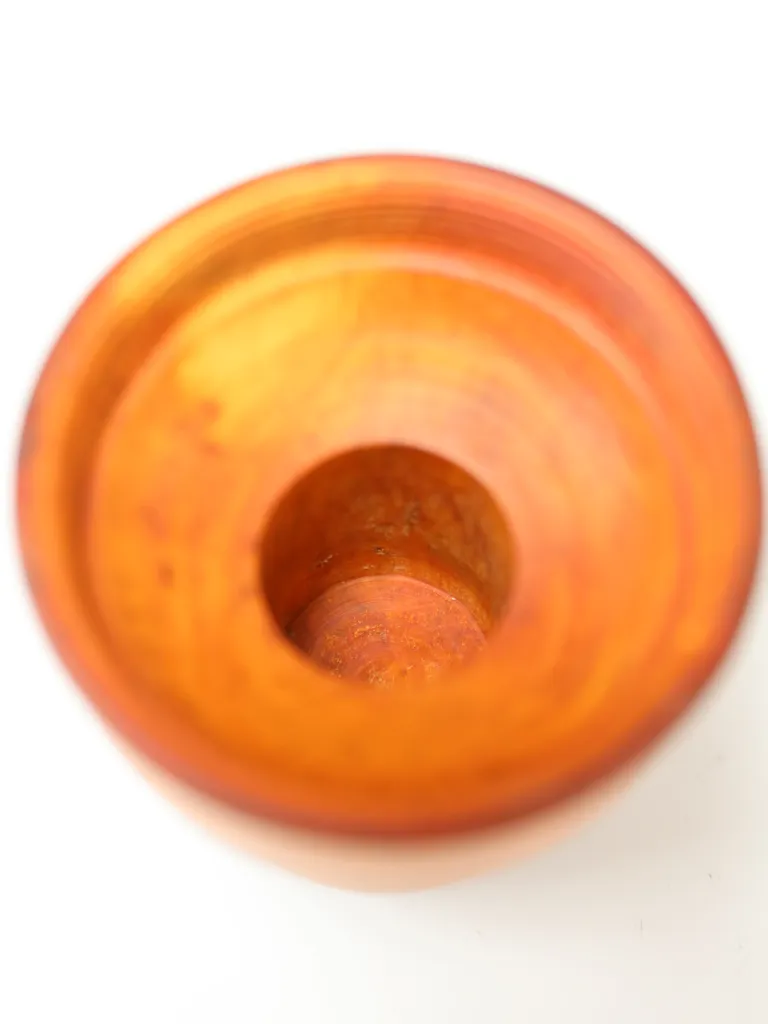
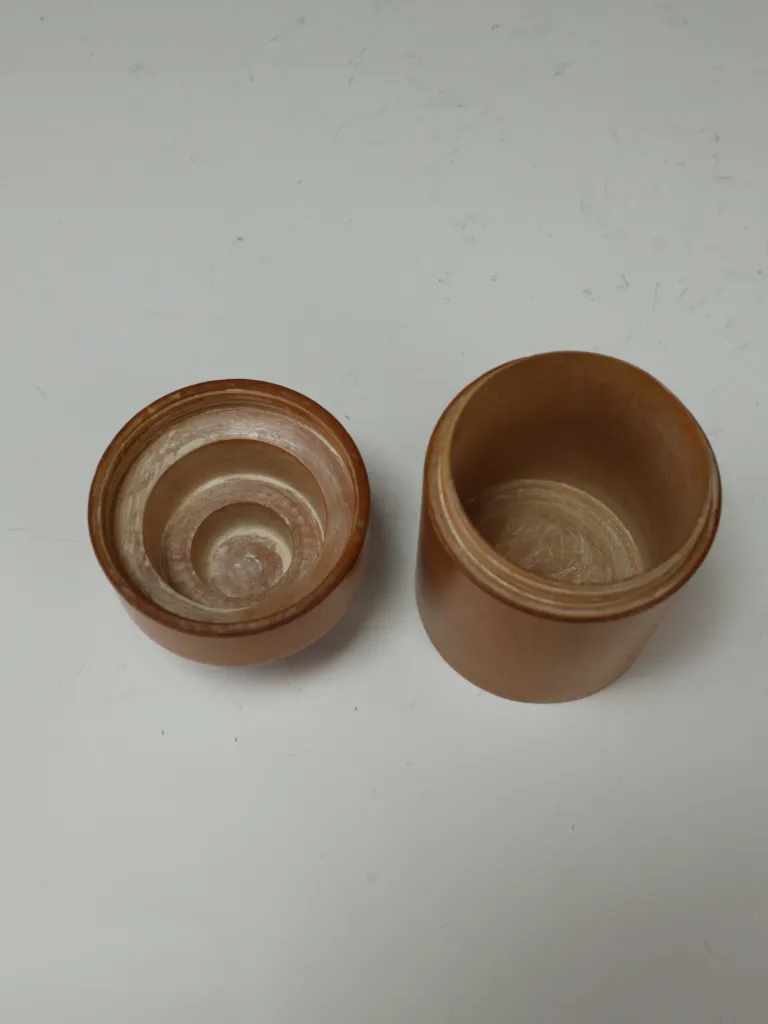
Their interiors have been hollowed to accommodate glass medicine bottles, while the substantial wooden outer walls provided protection against accidental knocks and breakage.
Comparable Victorian boxwood medicine bottle cases are recorded at approximately 15–17 cm high, making the larger example in this pair consistent with known full-size apothecary bottle holders.
One of the most intriguing details is the pale silvery material surviving within the interior of one case.
This may indicate that the case acquired a secondary use within a pharmacy after its original bottle was removed, potentially being employed during the process of silvering medicinal pills.
Silvering was a recognised pharmaceutical process in which prepared pills were moistened and gently rolled with silver leaf until their surfaces became coated. Purpose-made boxwood pill silverers are documented from the 19th century.
The present objects were originally bottle cases rather than purpose-made pill silverers, but the surviving residue provides interesting evidence of possible later pharmaceutical use.
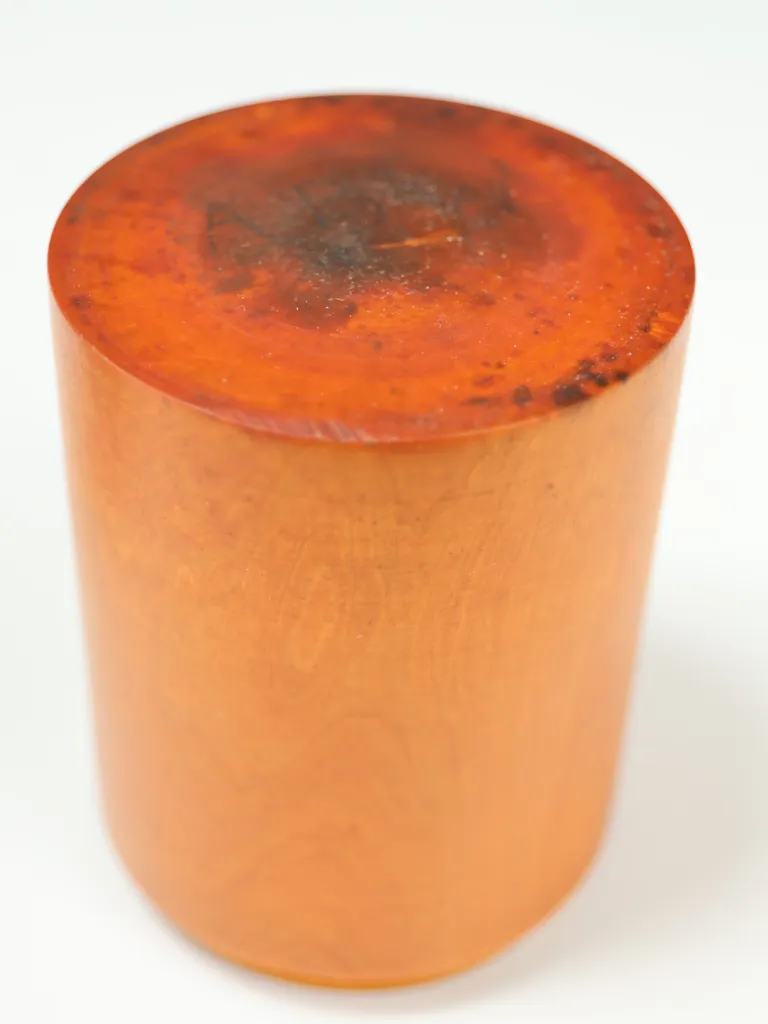
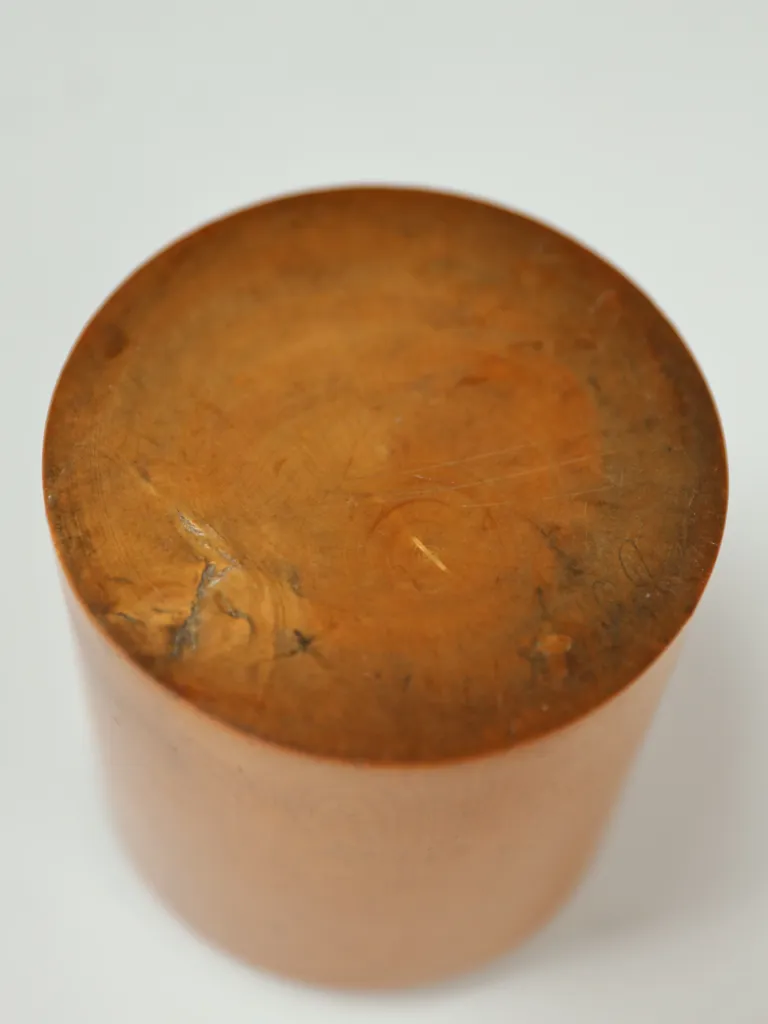
The boxwood has acquired a particularly attractive warm honey, amber and reddish-brown colour, enhanced by the naturally fine grain of the timber.
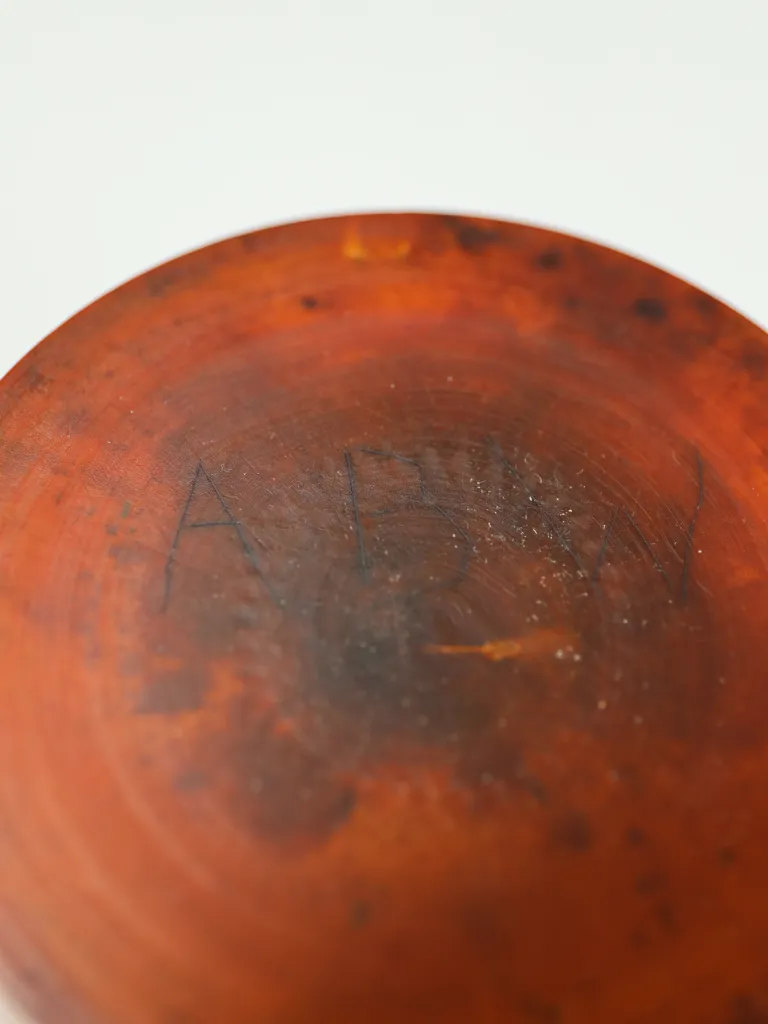
Subtle concentric turning marks remain visible across the domed tops and interiors, while darker areas, small knots and historic markings provide further character.
The larger case displays particularly attractive variations within the timber, including a distinctive dark natural marking to the front.
The surfaces retain the tactile, softly polished appearance that makes antique treen particularly desirable.
Presented in good antique condition with wear consistent with age and original working use.
Both retain their principal turned wooden components, although the original internal glass medicine bottles are no longer present.
There are historic scratches, marks, rubbing, small knocks, colour variation and natural imperfections within the timber.
The interiors display further evidence of use, including rubbing and deposits. One retains the notable pale silvery residue associated with its possible secondary pharmaceutical use.
The historic surfaces and patination have been retained, preserving the character of these functional pieces of Victorian medical history.
Please refer closely to the detailed photographs, which form an integral part of the condition report.
An appealing combination of antique treen, social history and pharmaceutical history, these bottle cases have considerable decorative appeal beyond their original practical purpose.
Their beautifully simple cylindrical silhouettes have an almost contemporary quality, while the rich boxwood colour and softly aged surfaces immediately reveal their age.
Displayed together, they would make an unusual addition to a cabinet of curiosities, apothecary collection, country-house interior, study, library or collection of antique medical and scientific objects.
Maximum Height: 17.8 cm / 7 inches
Maximum Width: 7.6 cm / 3 inches
Maximum Depth: 7.6 cm / 3 inches
Combined Weight: 0.4 kg / 0.9 lbs
Every item offered by Shackleton Fox is carefully inspected, prepared, and where necessary conserved within our workshop prior to sale.
As heritage craftsmen and antique specialists, we believe in preserving the authenticity and integrity of each piece. Original finishes, patina, wear, and signs of age are retained wherever possible, as these elements contribute to both character and historical significance.
When restoration, rewiring, repairs, or conservation work is required, it is undertaken sympathetically using traditional techniques and materials appropriate to the period of the piece. Our philosophy is one of careful stewardship rather than unnecessary restoration, ensuring antiques remain both functional and historically respectful.
The result is a collection of pieces that have been thoughtfully prepared, allowing future owners to enjoy them with confidence while preserving their unique story and character.