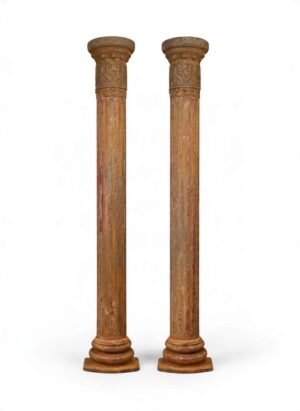
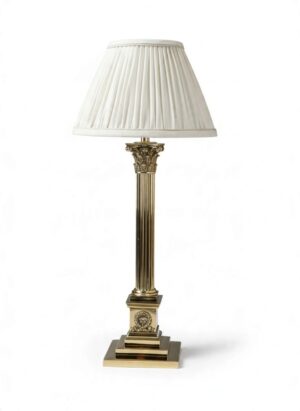
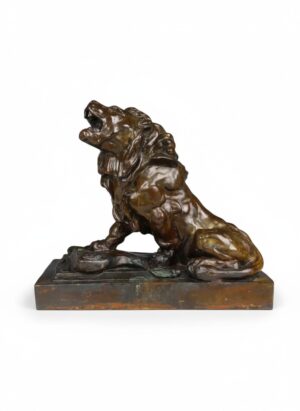
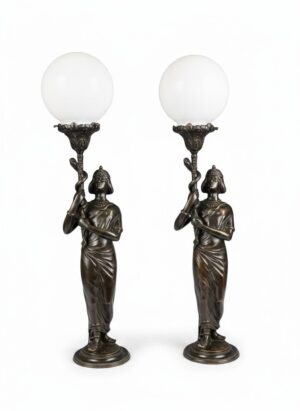
Casting is the process of forming an object by pouring a liquid material, most often molten metal, into a mould and allowing it to set. The same principle is used for plaster, glass and, in the form of slip casting, ceramics, and it allows complex shapes to be produced in quantity from a single model.
The two principal methods for metal are sand casting, in which molten metal is poured into a cavity formed in packed sand, and lost-wax casting, in which a wax model is encased in a heat-resistant mould and melted out before the metal is poured in. Sand casting was widely used for iron, brass and spelter, while lost-wax casting was favoured for fine bronze sculpture because it captures detail with great fidelity. After casting, pieces were usually cleaned, chased and finished by hand to sharpen detail and remove flaws. When examining cast objects, collectors look for crisp, well-defined detail, careful hand finishing and a sound surface free of porosity or cracks. Later casts taken from an existing piece, rather than from the original model, tend to be slightly smaller and softer in detail, which can help to identify reproductions. Good casting signals quality.