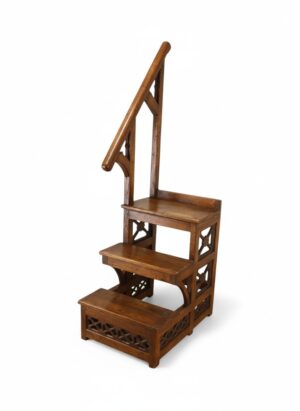
Handcrafted furniture is furniture made largely by hand by skilled craftsmen using traditional tools and techniques, rather than by machine-led factory production. Almost all furniture made before the nineteenth century was handcrafted, and the term is also used for later furniture produced by makers who deliberately preserved hand methods.
Before industrialisation, furniture was made in workshops where joiners, turners, carvers and cabinetmakers worked mainly with hand saws, planes and chisels. Signs of hand work include slight irregularities in dovetails, plane marks on the undersides and backs, uneven turning and hand-cut screws and nails. The Industrial Revolution brought steam-powered machinery, and by the later nineteenth century much furniture was mass-produced. In response, the Arts and Crafts movement championed hand craftsmanship, and makers such as Ernest Gimson, the Barnsley brothers and Robert Thompson produced furniture in which visible tool marks and honest construction were celebrated. Collectors value handcrafted furniture for its individuality, character and quality of materials. When assessing a piece, examine the construction carefully, since evidence of hand work helps establish age and authenticity, and well-made handcrafted furniture lasts for generations.