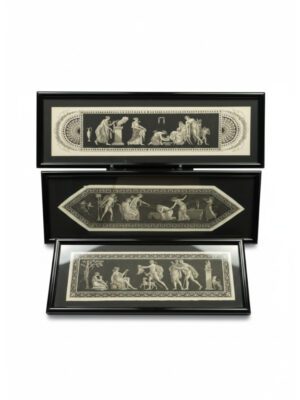
A mezzotint is a printmaking technique, and the print produced by it, in which the image is created in tones rather than lines. The copper plate is first roughened all over with a toothed tool called a rocker, so that it would print a rich velvety black; the engraver then scrapes and burnishes areas smooth to produce lighter tones and highlights.
The process was developed in the seventeenth century and became so closely associated with Britain in the eighteenth century that it was known on the Continent as the English manner. It was ideal for reproducing oil paintings, particularly the portraits of Reynolds, Gainsborough and their contemporaries, and later for sporting and landscape subjects. Because the burr on the plate wears quickly, only a limited number of fine impressions could be taken, and early impressions with deep, glowing blacks are much preferred to later, greyer ones. Collectors look at the quality of the impression, the margins, the state of the plate and the presence of lettering or proof marks, as well as condition problems such as foxing, trimming and fading. Framed mezzotints suit panelled libraries and halls, where their dark tonality complements old timber.