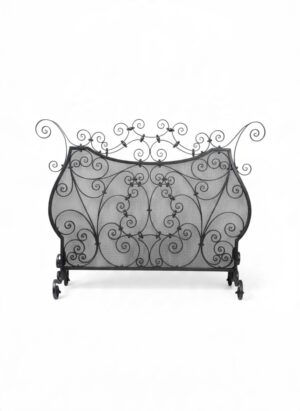
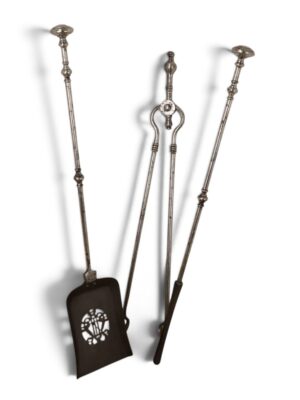
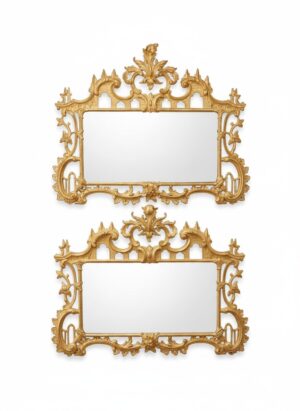
Openwork is any form of decoration in which the material is pierced, cut through or built up so that the background is open and light passes through the design. It is found in carved wood, pierced silver and brass, cast iron, porcelain, glass, ivory and textiles, and gives an object a lighter, more delicate appearance.
Common examples include the pierced galleries of Georgian silver salvers and cake baskets, fret-cut galleries on furniture, carved chair splats, reticulated porcelain baskets and plates, cast-iron garden benches and the cut and drawn threadwork of lace and whitework. Chinese and Japanese craftsmen were particularly skilled at intricate openwork carving in wood, jade and ivory, and their work influenced European taste. Because the remaining material is thin and exposed, openwork is vulnerable to damage, and collectors should check carefully for breaks, splits, soldered repairs and missing sections. On silver, piercing was originally done by hand with a fine saw, while later pieces were often machine-stamped, so the crispness and regularity of the cuts can help date a piece. Openwork brings texture and a play of light and shadow to any display.