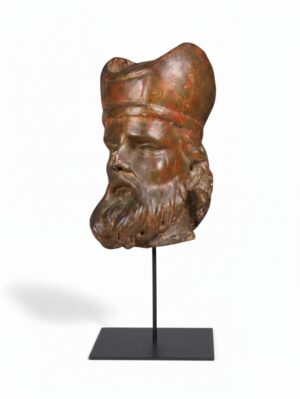
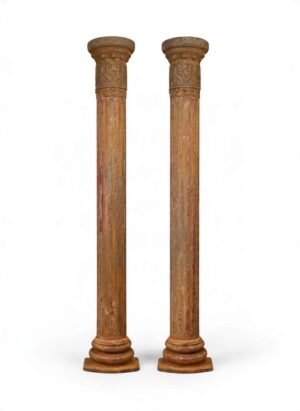
Architectural carving is decorative sculpture cut in stone or wood as part of a building, including capitals, corbels, friezes, keystones, door cases, chimneypieces, bosses and panels. Unlike free-standing sculpture, it is designed to be seen in a fixed position and to work with the structure and mouldings around it.
Medieval masons produced some of the finest English examples in churches and cathedrals, with foliage, grotesque heads and figures carved in local limestone and oak. The classical revival from the seventeenth century onwards brought acanthus scrolls, egg-and-dart, swags and the orders of architecture into houses of every scale, while carvers such as Grinling Gibbons raised decorative woodwork to the level of fine art. The Victorians revived Gothic carving on a vast scale for churches, public buildings and villas. Salvaged carved elements now appear on the market as architectural fragments, and collectors value crisp, hand-cut detail, good weathering, original surface and a known building of origin. A single carved corbel or capital can be mounted as a sculptural object, used as a pedestal or set into a garden wall.