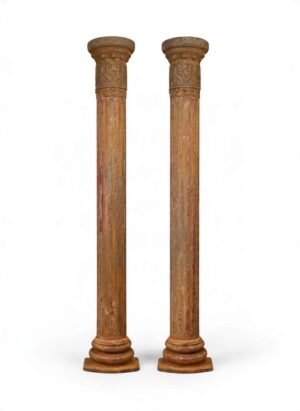
Baroque architecture is the dramatic and theatrical style that developed in Rome in the early seventeenth century and spread across Catholic Europe and beyond. It uses classical elements such as columns, pediments and domes, but combines them with bold curves, contrasts of light and shade, rich ornament and a strong sense of movement.
Gian Lorenzo Bernini and Francesco Borromini were its leading Roman exponents, and the style later reached its most extravagant form in the churches and palaces of southern Germany, Austria, Spain and Portugal. In France it took a more restrained form, seen at Versailles. English Baroque, flourishing from the late seventeenth century to the 1720s, was the work of Sir Christopher Wren, Nicholas Hawksmoor, Sir John Vanbrugh and Thomas Archer, producing buildings such as St Paul's Cathedral, Castle Howard and Blenheim Palace. It was superseded in Britain by the cooler, more correct Palladian style. The baroque taste extended into interiors, with grand staircases, painted ceilings, carved woodwork and gilded furniture, and fragments, carvings and decorative fittings from the period are highly regarded in the architectural antiques trade.