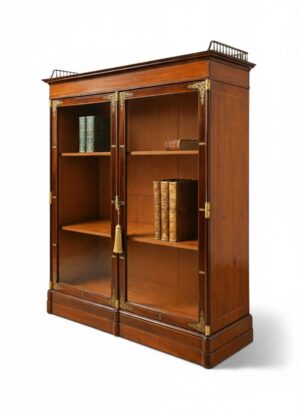
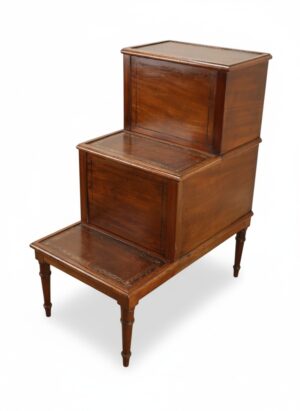
Cabinet furniture is the general term for fine case furniture made by a cabinetmaker, such as cabinets, bookcases, bureaux, chests of drawers, commodes and display cabinets. It distinguishes the skilled work of veneering, inlay and precise dovetailed construction from the work of joiners, turners and chairmakers.
In England the cabinetmaker emerged as a distinct trade in the late seventeenth century, when walnut veneering and new construction methods arrived from the Continent. The eighteenth century was a golden age, with London workshops such as those of Thomas Chippendale and later firms such as Gillows of Lancaster producing mahogany and satinwood pieces of great refinement, guided by pattern books by Chippendale, Hepplewhite and Sheraton. In the nineteenth century, large firms supplied cabinet furniture in every historical style. When assessing a piece, collectors look at the quality of the timber and veneers, the cutting of dovetails, the drawer linings, the originality of handles and locks, the colour and patina, and whether components such as a bookcase top and base have always belonged together. Good cabinet furniture is valued in interiors for combining storage with architectural presence.