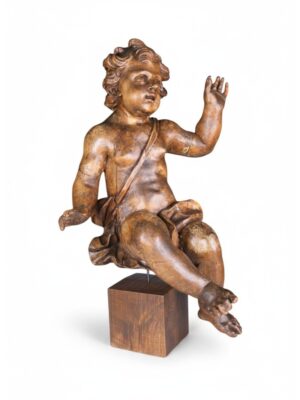
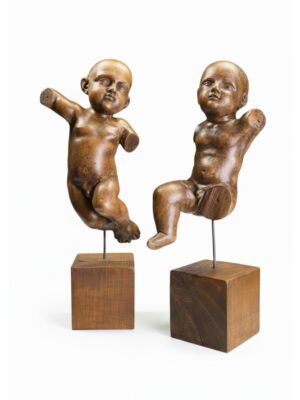
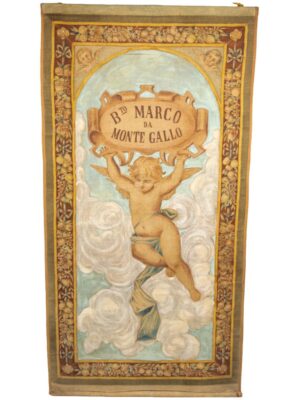
A cherub, in the decorative arts, is the figure of a chubby, winged infant, often shown in groups playing, carrying garlands or supporting cartouches. Strictly, cherubim are an order of angels in the Bible, and the infant figure is often more accurately called a putto, the Italian term for a small boy, but the two words are commonly used interchangeably.
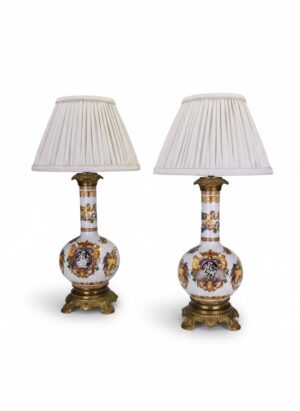
The motif derives from the Cupids and Erotes of classical antiquity and was revived in Renaissance Italy, where artists such as Donatello used it widely. It became a favourite of Baroque and Rococo art, appearing in paintings, sculpture, plasterwork and church monuments, and in the decorative arts on porcelain figures, bronze clocks, candelabra, mirror frames, chandeliers and furniture mounts. A winged cherub head, without a body, is a frequent feature of carved woodwork, church memorials and the spandrels of English longcase clock dials. Victorian and French nineteenth-century makers produced cherub figures in porcelain, spelter, bronze and marble in great quantities. Quality varies widely, so collectors look for well-modelled faces and limbs, crisp detail and good condition. Cherubs bring a light, playful note to classical and romantic interiors.