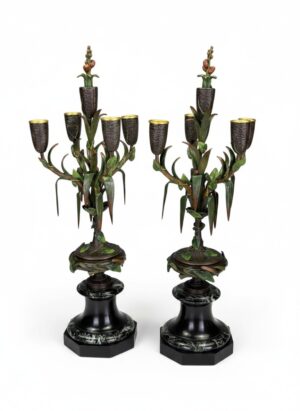
A cold-painted bronze is a small cast bronze figure decorated with paint applied cold, without firing, so that it is not a true enamel. Layers of colour are built up over the metal, often with great delicacy, to give a lifelike appearance to animals, birds, figures and objects.
The technique is most closely associated with Vienna, where foundries and workshops of the later nineteenth and early twentieth centuries produced large numbers of miniature cold-painted bronzes for an international market. Subjects include birds, dogs, cats, game animals, comic animal groups, Orientalist figures of carpet sellers and Arab traders, and novelty objects such as inkwells, trays and lamps. The firm of Franz Bergman is the best known, and some pieces carry a stamped mark, although many are unsigned. Cold-painted bronzes were also made elsewhere, and spelter imitations exist. Because the paint is not fired, it is vulnerable to wear, chipping and fading, and condition of the original paintwork is the most important factor in value. Collectors should beware of overpainting and repainting. Displayed in groups, these finely detailed miniatures bring colour and wit to a cabinet or desk.