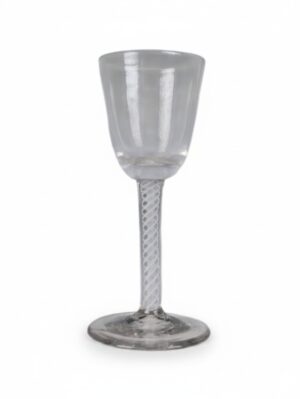
English glass refers to glass made in England, an industry whose history became internationally important after the development of lead glass in the 1670s, associated with George Ravenscroft. Lead glass was heavier, clearer and more brilliant than earlier soda glass, and it allowed English glassmakers to produce outstanding drinking glasses, decanters and cut glass.
Eighteenth-century English drinking glasses are a major collecting field, classified by their stems, including baluster, light baluster, air twist, opaque twist and facet-cut forms, as well as by engraved decoration such as Jacobite emblems. The Glass Excise Acts, first introduced in 1745, taxed glass by weight and encouraged lighter forms and elaborate cutting. The nineteenth century brought pressed glass, coloured glass from Bristol and Nailsea, and the decorative art glass of Stourbridge firms such as Thomas Webb and Stevens & Williams, as well as the work of James Powell at Whitefriars. Collectors examine the colour and weight of the metal, wear on the foot, the pontil mark, the quality of cutting or engraving, and freedom from chips or sickness. Reproductions are common, so experience is valuable.