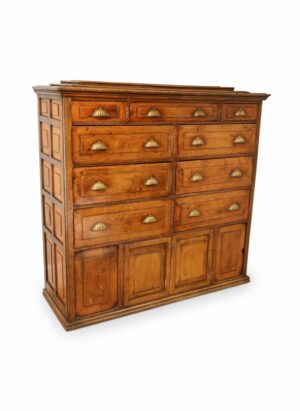
A keyhole is the shaped aperture in a door, drawer, lid or box through which a key is inserted to operate a lock. On antique furniture the keyhole is usually framed by an escutcheon, a protective and decorative plate or inlay of brass, bone, ivory or wood that prevents wear to the surrounding timber.
The form of keyholes and their escutcheons is useful when dating and assessing furniture. Seventeenth- and early eighteenth-century pieces often have large engraved or pierced brass escutcheons, while Georgian furniture typically has neat brass plates or inset brass outlines, and Regency pieces may have fine brass or ebony inlay. Victorian and later furniture shows a wide range of cast and stamped fittings. Examining the keyhole can reveal much about a piece's history: extra holes, filled lock recesses, mismatched escutcheons or keyholes that do not align with the lock behind may indicate replaced locks, changes of hardware or even alteration of the piece. Wear around the opening should be consistent with age and use. Keyholes are sometimes concealed under sliding covers or hinged drops for security. Original locks with working keys add both practicality and value.