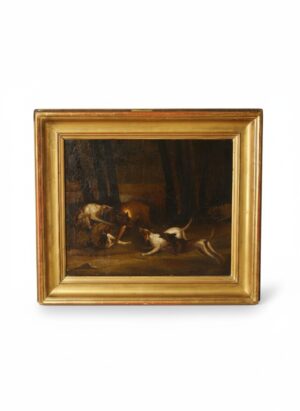
Landscape painting is the depiction of natural scenery, such as countryside, mountains, rivers, woodland and coast, as the principal subject of a work of art. It may be realistic or idealised, painted outdoors from nature or composed in the studio, and executed in oil, watercolour, gouache, ink or other media.
As an independent genre, landscape painting rose to prominence in Europe in the seventeenth century, particularly in the Dutch Republic, with artists such as Jacob van Ruisdael and Meindert Hobbema, while in Italy Claude Lorrain and Nicolas Poussin developed the ideal classical landscape that strongly influenced English taste and garden design. British landscape painting flourished from the eighteenth century, through Gainsborough, Richard Wilson, John Constable and J. M. W. Turner, and the English watercolour school. Victorian painters added rural genre scenes and Highland views, while the French Impressionists transformed the genre with light and colour. Collectors consider the artist, the quality of handling, composition, condition, frame and provenance. Many attractive works by lesser-known and regional artists are available at modest prices, and landscapes remain among the most popular pictures for hanging in country house interiors.