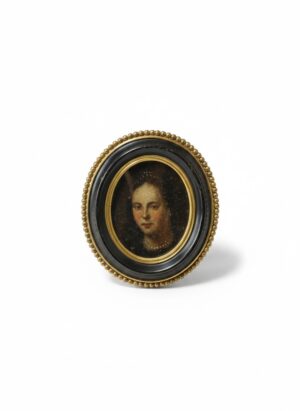
Portrait painting is the art of depicting a particular person in paint, recording their likeness and often also their status, character and achievements. It ranges from small head-and-shoulders studies to grand full-length compositions, family groups and conversation pieces.
In Britain portraiture was the dominant genre of painting for several centuries. Hans Holbein the Younger set the standard at the Tudor court, and Anthony van Dyck transformed the image of the Stuart aristocracy in the seventeenth century, followed by Peter Lely and Godfrey Kneller. The eighteenth century produced Joshua Reynolds, Thomas Gainsborough, George Romney and Allan Ramsay, while Thomas Lawrence and Henry Raeburn dominated the early nineteenth century, and John Singer Sargent stood out in the Edwardian years. Country houses typically display long sequences of family portraits, and these are central to their character. Value depends on the artist, the quality of execution, the identity and interest of the sitter, condition and provenance. Many portraits are by followers or provincial painters, and attribution needs careful research. Period portraits remain a strong decorative choice for halls, staircases and dining rooms, lending a room instant age and presence.