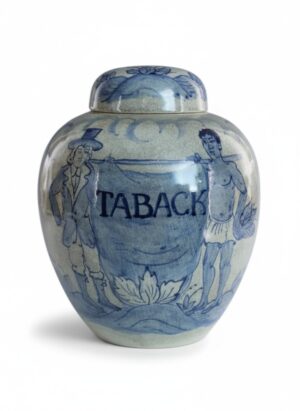
Crazing is a fine network of hairline cracks in the glaze of pottery or porcelain, caused by the glaze and the body beneath expanding and contracting at different rates. It may develop during cooling in the kiln or gradually over many years through changes in temperature and humidity, and it is a common feature of antique ceramics.
Crazing is particularly frequent on earthenware and creamware, where the soft, porous body can absorb moisture, causing it to swell slightly and stress the glaze. Dirt, grease and tea can penetrate the fine cracks, leading to brown or grey discolouration that is hard to remove, and in severe cases the glaze may begin to flake. On some Chinese and Japanese wares a similar crackle was produced deliberately as a decorative effect, and this should be distinguished from accidental crazing. For collectors, light crazing on older earthenware is usually accepted as normal ageing and has only a modest effect on value, whereas heavy staining is more significant. Crazed pieces should not be soaked or put in a dishwasher. Similar fine cracking in the varnish or paint layers of oil paintings is generally referred to as craquelure.