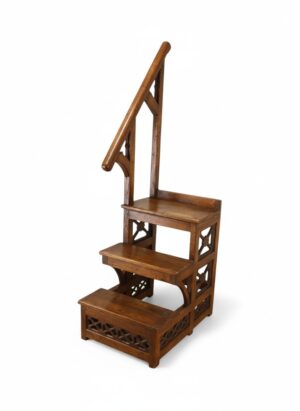
Patent furniture is furniture incorporating a mechanism or construction protected by a patent, typically designed to make it adjustable, folding, extending or convertible from one use to another. Such pieces are often stamped or labelled with the word Patent, the maker's name or a patent number, and they form a fascinating branch of furniture history that reflects a fascination with ingenuity and invention.
Patent furniture became especially popular in England from the late eighteenth century through the Victorian era. Regency makers in London produced patent extending dining tables, library steps that converted from chairs or tables, reclining chairs and portable campaign furniture for officers and travellers. Firms such as Morgan and Sanders advertised patent sofa beds and military chests, while Victorian manufacturers offered mechanical invalid chairs, adjustable reading tables, folding beds and countless other devices. Collectors look for original mechanisms in working order, legible maker's stamps or brass plates, and the presence of all detachable parts. Patent furniture combines decorative appeal with practicality, and items such as extending tables, adjustable library tables and reading stands still perform their original role well in modern homes.