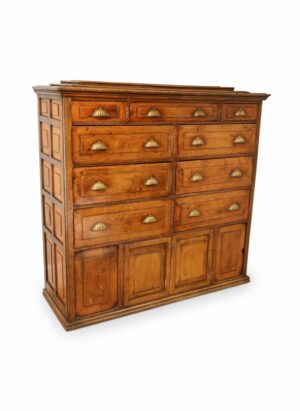
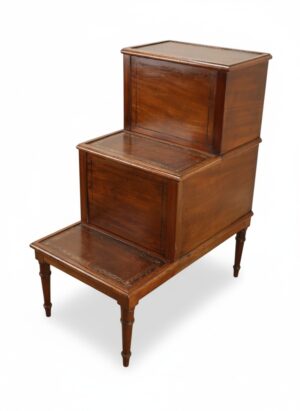
Travelling furniture is furniture designed to be dismantled, folded or packed so that it can be transported easily and reassembled at its destination. It includes campaign chests, folding chairs and tables, collapsible beds, portable desks, writing slopes, travelling dressing cases and canteens.
The tradition is ancient, but the best-known British examples date from the late eighteenth and nineteenth centuries, when army officers, colonial administrators and travellers needed practical but comfortable furniture for postings across the Empire. Makers such as Ross & Co. of Dublin and Hill & Millard and Thomas Butler of London supplied ingenious pieces, and many were retailed through specialist outfitters. Typical features include flush brass handles, brass-bound corners, removable feet, chests that separate into two halves and chairs that fold or break down for packing. Mahogany, teak and camphor wood were common timbers. Collectors value good construction, original brass fittings, maker's labels or stamps, and the survival of the complete mechanism. The clean lines and fine engineering of travelling furniture suit both traditional and modern interiors, and campaign chests in particular are popular as bedroom and dressing-room pieces.