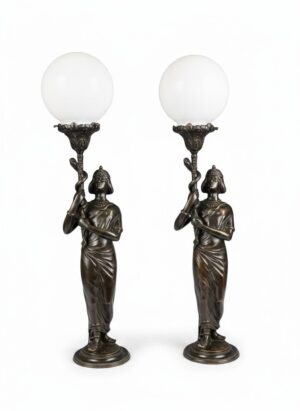
Ancient Egypt was the civilisation that developed along the Nile valley for some three thousand years before Roman rule, producing monumental architecture, sculpture, painting and decorative objects of lasting influence. In the antiques world the term covers both genuine Egyptian antiquities and the many later objects inspired by Egyptian art.
Typical Egyptian antiquities include ushabti figures, scarabs, amulets, faience vessels, stone and bronze figures of gods, and fragments of tomb painting and relief. Egyptian motifs such as sphinxes, obelisks, lotus flowers, scarabs, winged discs and pharaonic heads have repeatedly inspired European designers. Napoleon's campaign in Egypt at the end of the eighteenth century, and the publications that followed, sparked the Egyptian Revival, seen in Regency and Empire furniture, clocks, bronzes and ceramics. A further wave of enthusiasm followed the discovery of Tutankhamun's tomb in 1922, influencing Art Deco jewellery, architecture and decorative arts. Collectors of genuine antiquities must pay close attention to provenance and legal export, as the trade is strictly controlled. Egyptian Revival pieces, by contrast, are collected for their quality, period and decorative appeal, adding exotic character to classical interiors.