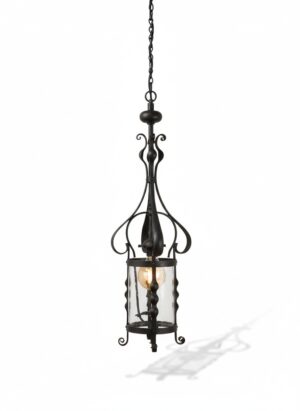
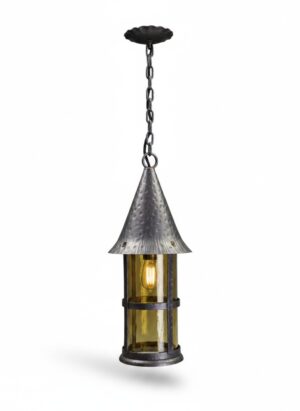
Architectural lighting refers to light fittings designed as part of a building's structure and decoration, rather than as movable lamps. In the antiques trade it covers hall lanterns, wall brackets, ceiling pendants, porch and exterior lanterns, lamp posts, gate lanterns and large fixtures salvaged from churches, banks, hotels, railway stations and public buildings.
Such fittings were often made to the specification of an architect and scaled to the space they served, so many are larger and more robust than domestic lights. Georgian and Regency examples were designed for candles or oil, Victorian ones commonly for gas, and from the later nineteenth century electric light transformed the design and placement of fittings. Makers worked in bronze, brass, cast iron, copper and glass, often in Gothic, classical or Arts and Crafts styles to suit the building. Today architectural lighting is highly prized by designers for its scale and quality. Buyers should consider the completeness of glass panels and fittings, the quality of castings, signs of weathering on exterior pieces, and the cost of rewiring and safety testing, which is essential before any antique fitting is installed.