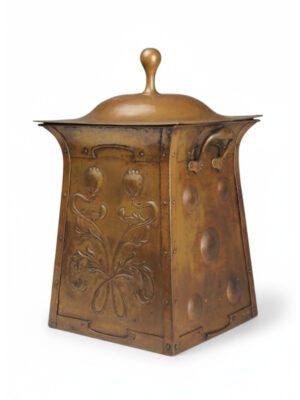
A coal scuttle is a container for holding a supply of coal beside the fireplace, ready to replenish the fire. Scuttles are usually made of copper, brass, iron or tinplate, often with a carrying handle and sometimes a hinged lid, and many have a deep lip or open front from which coal can be poured or scooped with a small shovel.
Coal scuttles became common in British homes in the eighteenth and nineteenth centuries as coal replaced wood as the main domestic fuel. Typical Georgian and early Victorian forms include the helmet scuttle, with its tall curved back and flared lip, and the cylindrical or bucket-shaped scuttle with a swing handle. Later Victorian scuttles were often decorated with repoussé, embossed panels, cast feet and handles or lion mask mounts, while the Arts and Crafts movement produced handsome hammered copper and brass examples. The purdonium, a lidded wooden box with a removable metal liner, was a more furniture-like Victorian alternative, often in walnut or mahogany. Collectors look for good colour, original handles and liners, quality of construction and freedom from splits or heavy dents. Today coal scuttles are used for logs, kindling or even as planters, adding warmth to fireplaces and country-house interiors.