Concrete is a building material made by mixing an aggregate of sand and gravel or crushed stone with a binder, usually cement, and water, which then sets into a hard, stone-like mass. It can be poured into moulds of almost any shape, making it suitable for structures, garden ornament and architectural detail.
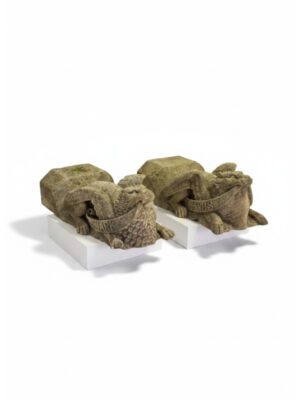
The Romans used a form of concrete based on lime and volcanic ash to build vaults and domes, including the Pantheon, but the technique largely fell out of use until the development of modern Portland cement in Britain in the nineteenth century. Reinforcing concrete with iron or steel bars transformed engineering from the late Victorian period onwards, and twentieth-century architects exploited its sculptural possibilities, culminating in the raw finishes of Brutalism. In the antiques trade concrete appears most often as garden ornament: urns, planters, troughs, birdbaths, statues and balustrading, sometimes made to imitate carved stone. Early and well-weathered pieces with a good surface are increasingly popular, as are mid-century designs. Buyers should look for crisp moulding, a mellow, lichen-covered surface and sound construction, checking for cracks, rusting reinforcement and spalling, which can be difficult to repair invisibly.