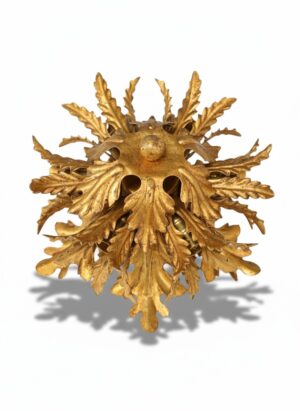
Florentine gilt describes a style of gilded decoration associated with the craft workshops of Florence, Italy, characterised by carved or moulded wood finished in gold leaf or gold paint, often with a deliberately distressed or antiqued surface and accents of red, green or cream paint. The term is applied to a wide range of decorative items, including trays, boxes, wall brackets, mirrors, picture frames, small tables, tole and gilt wood accessories.
Florence has a long tradition of gilding and carving dating back to the Renaissance, when its workshops produced magnificent frames and altarpieces. In the mid-twentieth century, particularly from the 1940s to the 1970s, many smaller firms in and around Florence revived these techniques for decorative household items aimed at tourists and export markets, especially in Britain and America. These pieces are typically decorated with scrolling acanthus, shells, garlands and rope borders, and are often stamped or labelled Made in Italy or Florence. Earlier and finer Florentine giltwood frames and carved pieces are more highly valued than mass-produced items. Collectors look for crisp carving, gilding with a warm glow rather than flat paint, and minimal flaking or losses. Florentine gilt pieces bring a touch of Italian elegance and old-world warmth to dressing tables, bedrooms and drawing rooms.