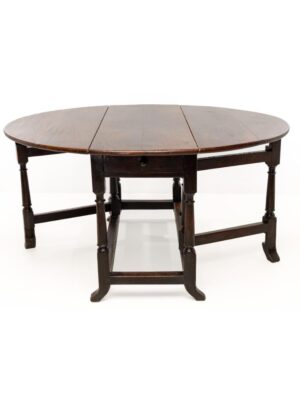
A Georgian dining table is a table made for dining in Britain during the Georgian period, broadly from 1714 to 1830. Dining rooms as dedicated spaces became common during the eighteenth century, and their tables developed into several characteristic forms, including gateleg and drop-leaf tables, D-end tables that could be joined to drop-leaf centres, and pedestal tables on turned columns with splayed legs.
Early Georgian tables were often of walnut or oak, while mahogany became the favoured timber from the 1730s, prized for its strength and the wide, unjointed boards it provided for tops. Drop-leaf tables on cabriole or straight legs were widely made, and by the later eighteenth century sets of tables combining D-ends with leaves allowed the size of the table to vary with the number of guests. Regency makers developed pedestal tables on two, three or more pillars, as well as patent extending mechanisms, and firms such as Gillows of Lancaster were noted for their dining furniture. Collectors look for good colour and figure, original leaves and clips, and parts that genuinely belong together, as many tables have been assembled from separate pieces. Large, original pedestal tables are especially sought after for period and contemporary dining rooms alike.