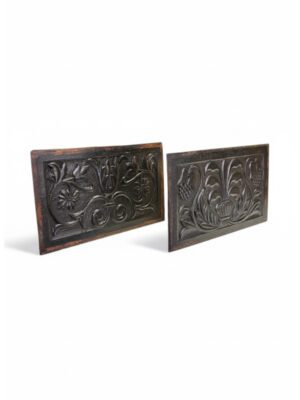
Georgian panelling is timber wall lining characteristic of houses built between 1714 and 1837, made up of panels set within a framework of stiles and rails and finished with classical mouldings. Typical Georgian panels are raised and fielded, meaning the centre is thicker and bevelled towards the edges, and the arrangement is carefully proportioned and symmetrical.
In early Georgian houses panelling often ran the full height of the room, divided by a dado rail and topped with a cornice, in oak for the finest rooms and in pine or deal elsewhere. Pine panelling was nearly always painted, often in stone, grey, green or off-white colours. As the century progressed, fashion moved towards plastered and papered walls above a panelled dado, with panelling remaining in halls, staircases, libraries and smaller rooms. Architects working in the Palladian tradition treated panelling as part of a wider classical scheme with doorcases, chimneypieces and window shutters. Original panelling removed from demolished houses is sought after and is sometimes reinstalled in new settings. Buyers should check for completeness, later alterations and the condition of paint layers. Georgian panelling gives a room warmth, proportion and quiet architectural character in both historic and modern interiors.