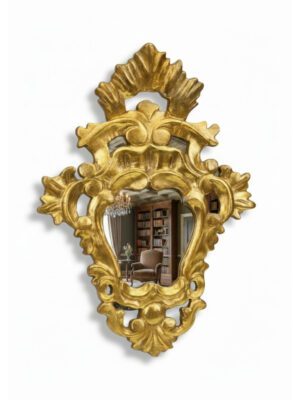
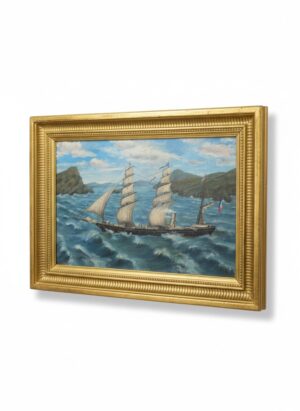
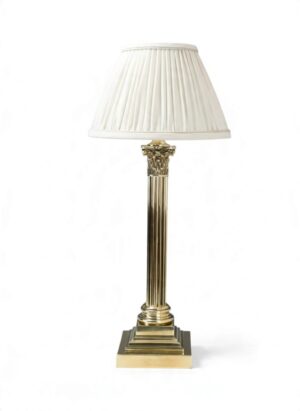
Gilding identification is the process of recognising how, and roughly when, a gilded surface was made on furniture, mirrors, picture frames, clocks and other decorative objects. It distinguishes the main techniques, chiefly water gilding, oil gilding, mercury or fire gilding on metal, and later imitations such as metal leaf, gilt paint and lacquered bronze powders.
Water gilding is applied over gesso and a layer of coloured clay known as bole, which is often red, yellow or grey; it can be burnished to a bright, mirror-like finish, and as it wears the bole shows through. Oil gilding is laid on a size and has a softer, matt appearance that cannot be burnished. On metal, mercury gilding produces a rich, durable surface typical of French ormolu, while electrogilding largely replaced it during the nineteenth century. Imitation leaf and gold paints tarnish or darken in ways real gold does not. Specialists examine wear patterns, the colour of the bole, the presence of punchwork and recutting, and whether areas have been regilded. Raking light, magnification and sometimes scientific analysis help. Accurate identification matters for dating, authentication and valuation, and it guides conservators in choosing appropriate methods of cleaning and restoration.