Glassblowing is the technique of shaping molten glass by inflating it with air through a hollow metal tube known as a blowpipe. Developed in the eastern Mediterranean in the first century BC, it transformed glassmaking by allowing thin-walled vessels to be made quickly and in great variety, and it remains the basis of hand-made glass today.
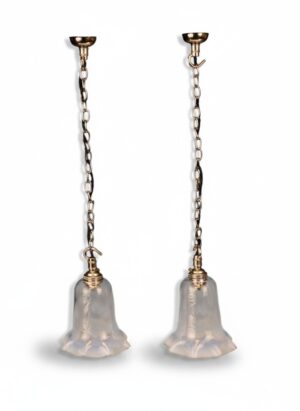
In free blowing, the glassblower gathers molten glass on the end of the blowpipe, inflates it into a bubble and shapes it using tools, wooden blocks and gravity, reheating it repeatedly in the furnace. The piece is often transferred to a solid iron rod called a pontil for finishing, which can leave a characteristic pontil mark on the base. Mould blowing, in which the glass is inflated into a shaped mould, allows repeated forms and patterns. Venice, Bohemia and England each developed distinguished traditions, and the technique was central to fine drinking glasses, decanters, lighting shades and art glass. Hand-blown glass can usually be recognised by slight irregularities, small bubbles, variations in thickness and, on older pieces, a pontil mark, all of which distinguish it from later machine-made production.