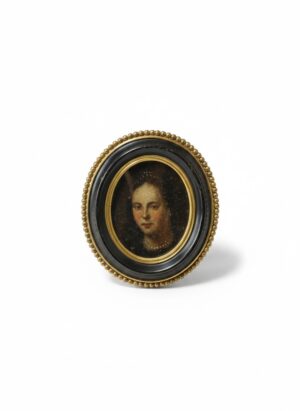
A portrait miniature is a small, finely painted portrait, usually no more than a few inches high, made to be held in the hand, worn as jewellery or kept in a case or locket. Miniatures were painted in watercolour on vellum or ivory, in enamel on metal, or in oils on copper, and they served as intimate keepsakes of loved ones, tokens of love and loyalty and memorials to the dead.
The art grew from the tradition of manuscript illumination and flourished in Tudor England, where Hans Holbein the Younger and later Nicholas Hilliard and Isaac Oliver set a high standard, often painting on vellum mounted on card. In the eighteenth century ivory became the usual support, giving a luminous quality to the skin tones, and the later eighteenth century is regarded as a golden age, with painters such as Richard Cosway, John Smart, George Engleheart and Ozias Humphry. Demand declined after the introduction of photography in the mid-nineteenth century. Collectors value attributed works, fine painting, original frames or cases and identified sitters. Because many miniatures are painted on ivory, buyers and sellers in Britain must follow the rules governing antique ivory.