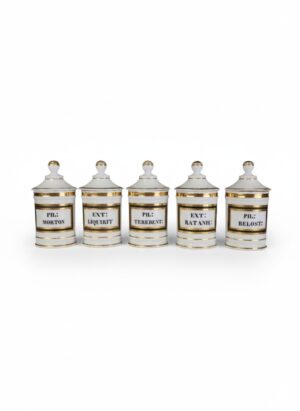
Rouen faience is tin-glazed earthenware made in Rouen, the capital of Normandy, which became one of the earliest and most influential centres of faience production in France. Although potters worked in the city earlier, the industry grew rapidly from the mid-seventeenth century, and by the late seventeenth and early eighteenth centuries Rouen was producing wares that set the fashion for French ceramics.
Its most celebrated decoration is the style rayonnant, a radiating pattern of lambrequins, or lace-like scalloped borders and pendants, painted in blue or in blue and red on a white ground and inspired by contemporary textiles, ironwork and bookbinding. Later Rouen wares broadened into polychrome designs, including chinoiserie, cornucopias and Rococo motifs, sometimes enriched with a bright yellow ochre. The factories produced large dishes, ewers, helmet-shaped jugs, salts, busts and even tabletops, serving tables that could not yet afford silver or porcelain. The industry declined in the late eighteenth century under competition from English creamware and porcelain. Because Rouen styles were widely copied, both in the eighteenth century and by later reproduction factories, collectors pay close attention to the quality of the painting, the body and glaze and the character of any wear before accepting a piece as genuine.