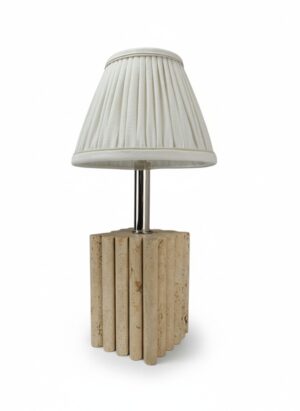
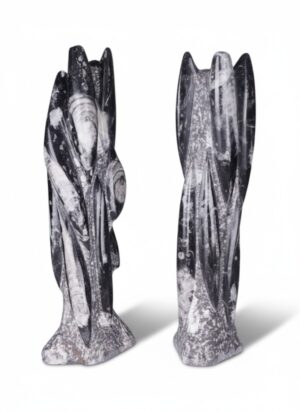
Travertine is a form of limestone deposited by mineral springs, especially hot springs, as calcium carbonate precipitates out of the water. As the stone forms, gases and plant material create small holes and cavities, giving travertine its characteristic porous, pitted texture and banded appearance in warm shades of cream, ivory, honey, walnut and rust.
The stone has been quarried since antiquity, most famously around Tivoli near Rome, and the Romans used it widely for buildings, including the Colosseum. It remained a key building stone in Italy through the Renaissance and Baroque periods, notably in the great colonnade of St Peter's Square. In later centuries travertine was exported across Europe and beyond, and in the twentieth century it became popular with modernist architects for cladding, flooring and stairs. In decorative arts it appears in table tops, consoles, pedestals, garden urns and fireplace surrounds, and it was much used for Italian mid-century furniture and lamps. Travertine may be left unfilled and textured or filled and polished to a smooth surface. Because it is relatively soft and sensitive to acids, collectors and owners should take care with staining and etching, and look for chips, filled repairs and cracks.