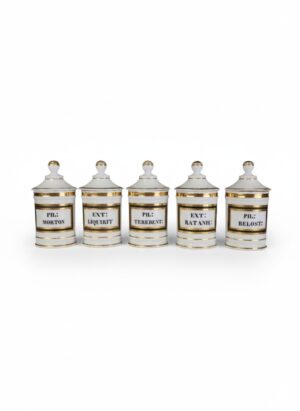
Vincennes porcelain is the soft-paste porcelain made at the royal château of Vincennes, east of Paris, during the 1740s and 1750s, before the factory moved to Sèvres. The Vincennes factory is therefore regarded as the forerunner of the celebrated Sèvres manufactory.
The factory enjoyed the support of King Louis XV and the patronage of Madame de Pompadour, and it received royal privileges to protect its production. Its early fame rested on exquisitely modelled porcelain flowers, which were mounted on gilt-bronze stems and used in bouquets, chandeliers and decorative arrangements. Vincennes also developed rich ground colours, including a deep blue and the turquoise bleu céleste, along with lavish gilding and fine painted decoration of birds, flowers and figures in reserves. Unglazed biscuit figures were another important innovation. Pieces are typically marked with the interlaced L cypher of the king, sometimes with a date letter. Because the factory moved to Sèvres in the mid-1750s, genuine Vincennes porcelain is rare and is largely found in museums and important collections. Many later Sèvres-style pieces carry imitation marks, so collectors require careful examination of paste, glaze, gilding and decoration.