£495.00
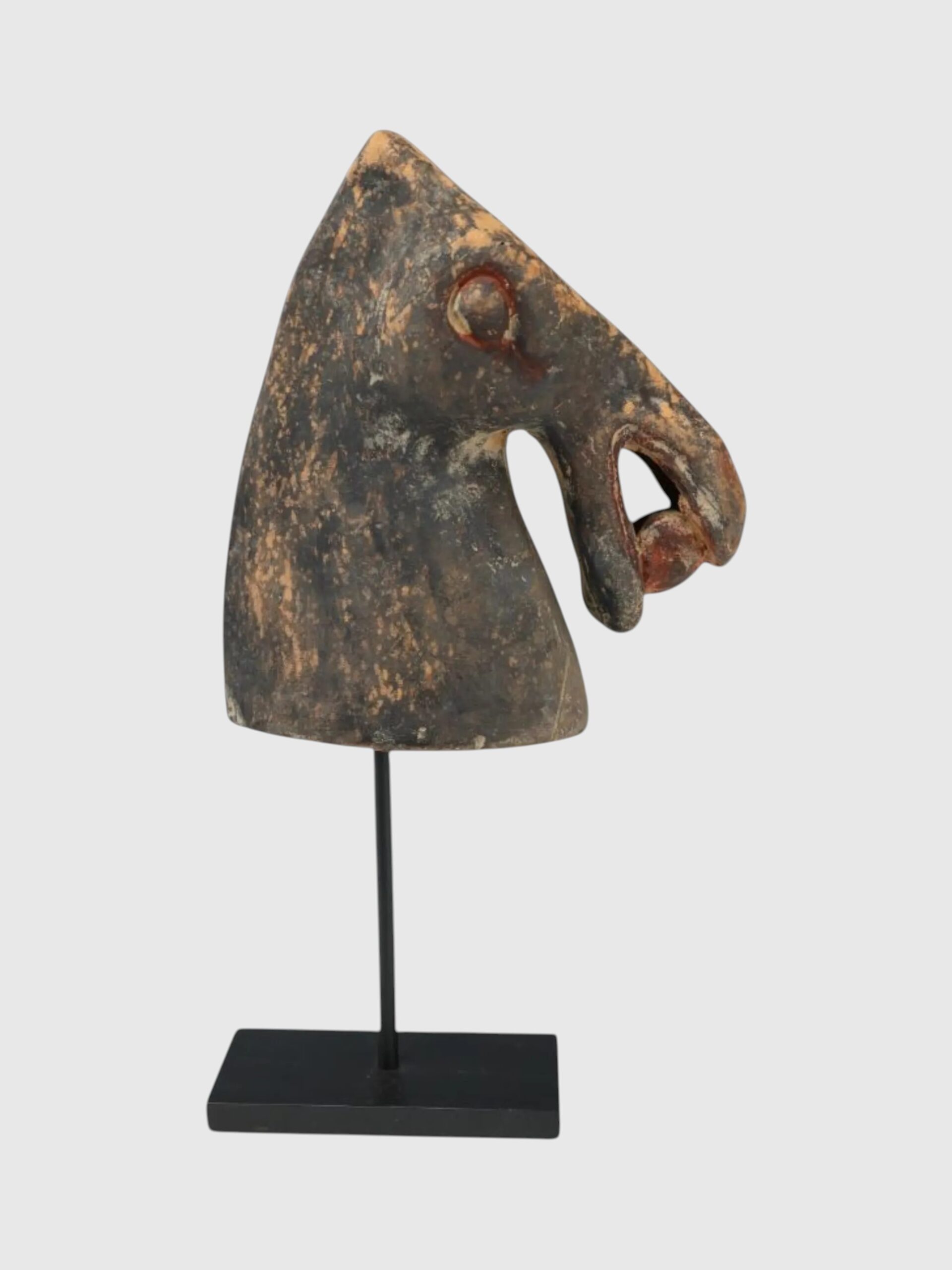
A highly evocative Chinese painted terracotta funerary horse head, modelled in the tradition of the Han Dynasty (206 BC–220 AD), retaining extensive traces of historic surface decoration and now presented as a sculptural object on a newly made bespoke black metal display stand.



A highly evocative Chinese painted terracotta funerary horse head, modelled in the tradition of the Han Dynasty (206 BC–220 AD), retaining extensive traces of historic surface decoration and now presented as a sculptural object on a newly made bespoke black metal display stand.
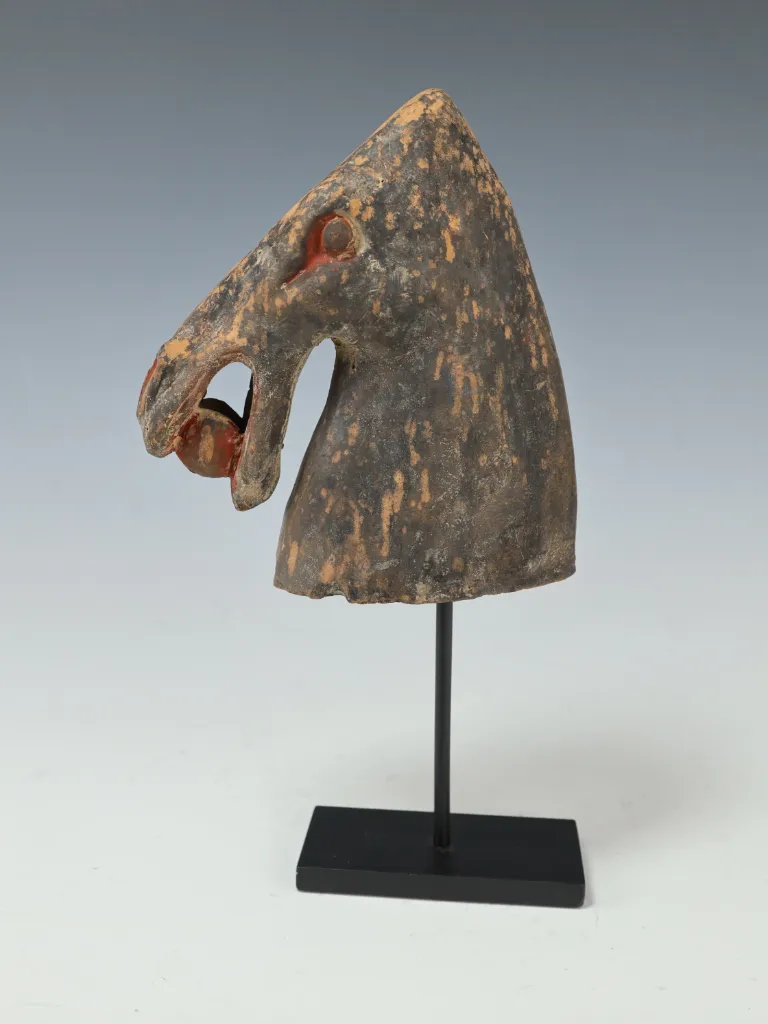
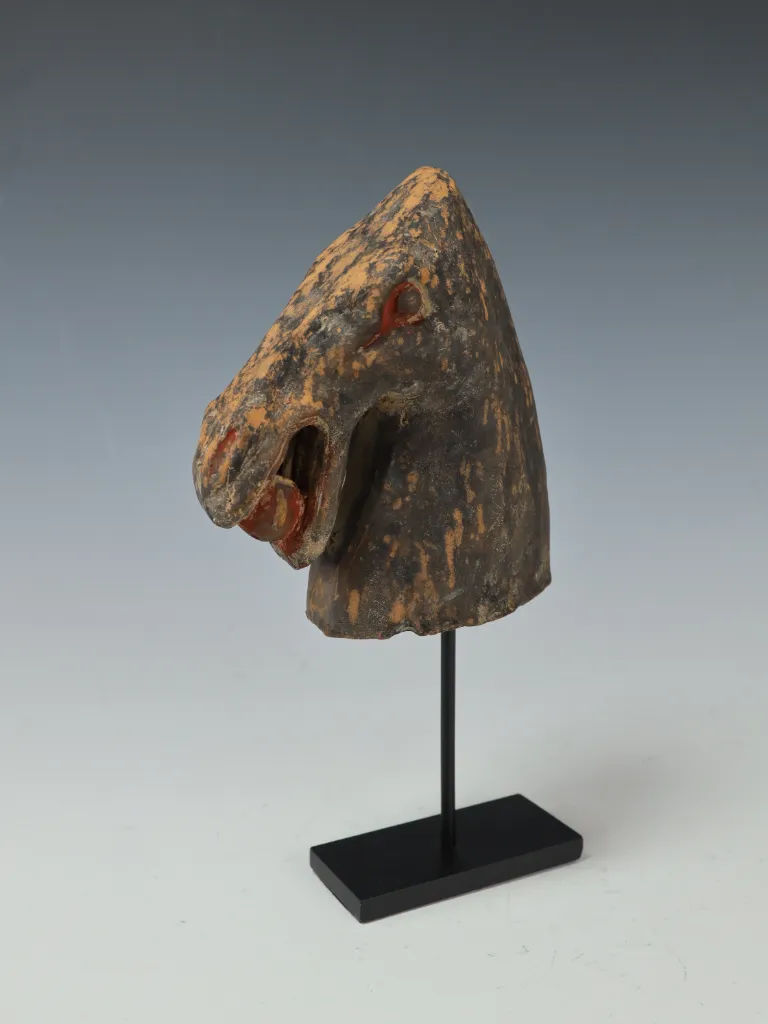
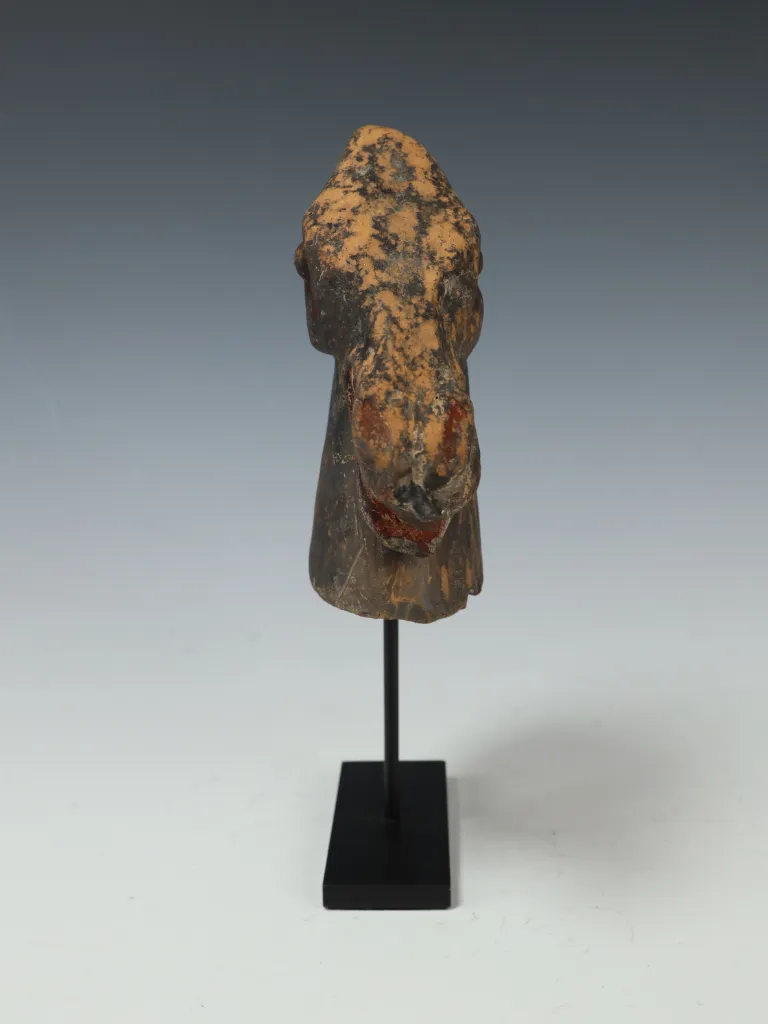
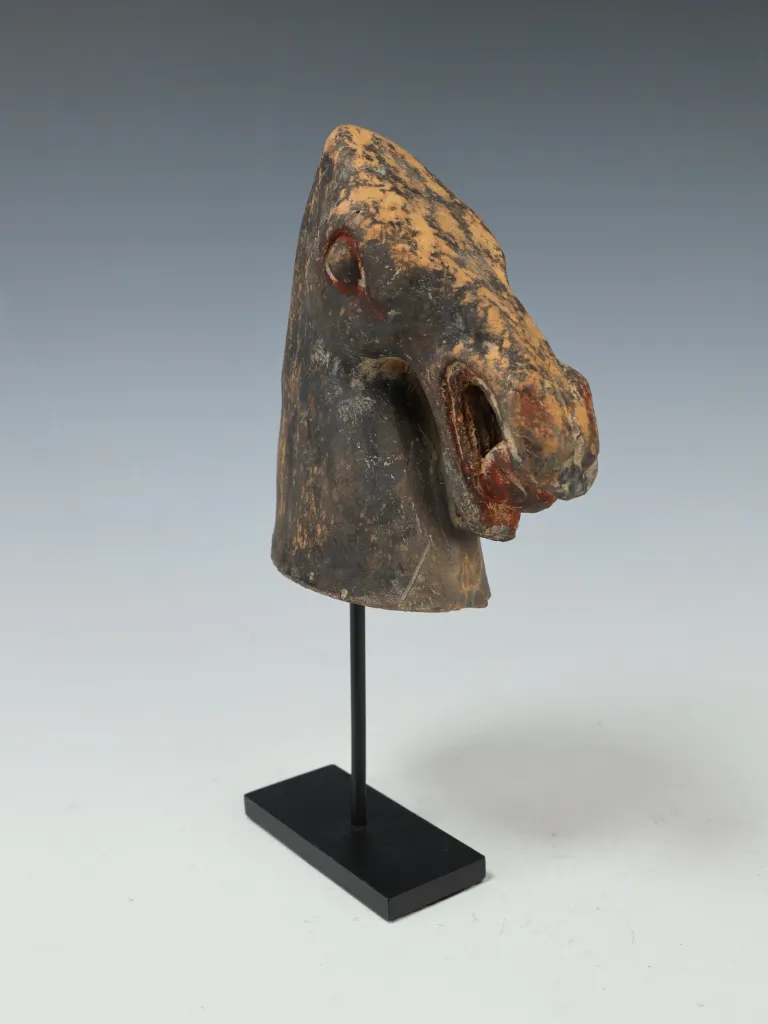
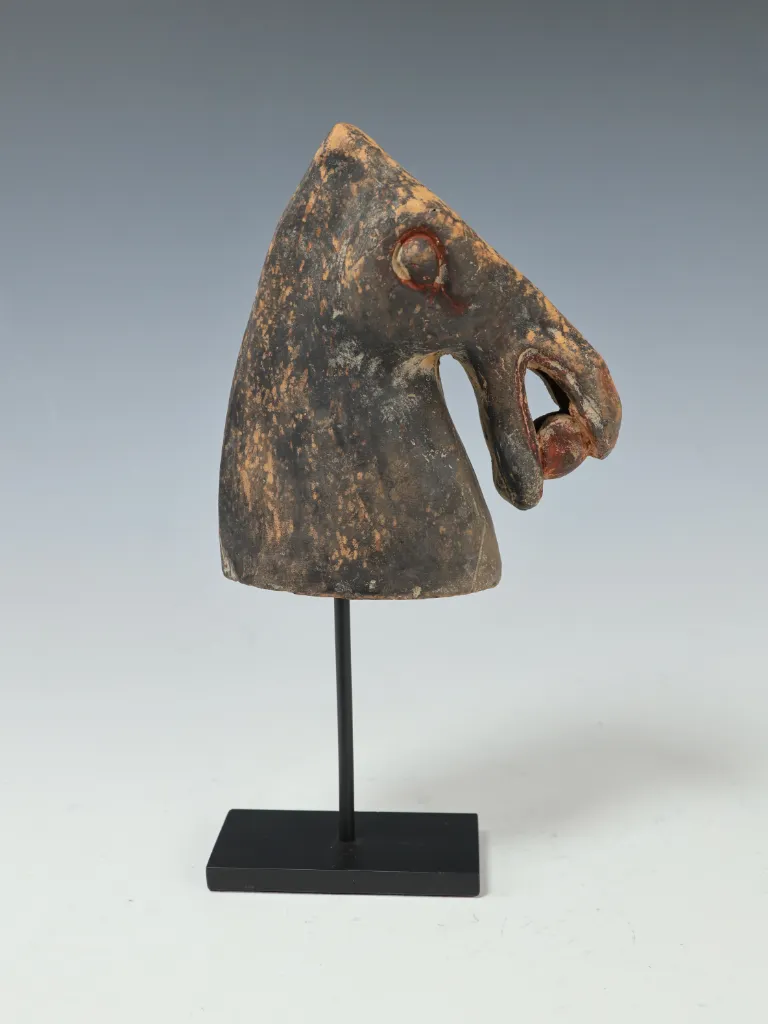
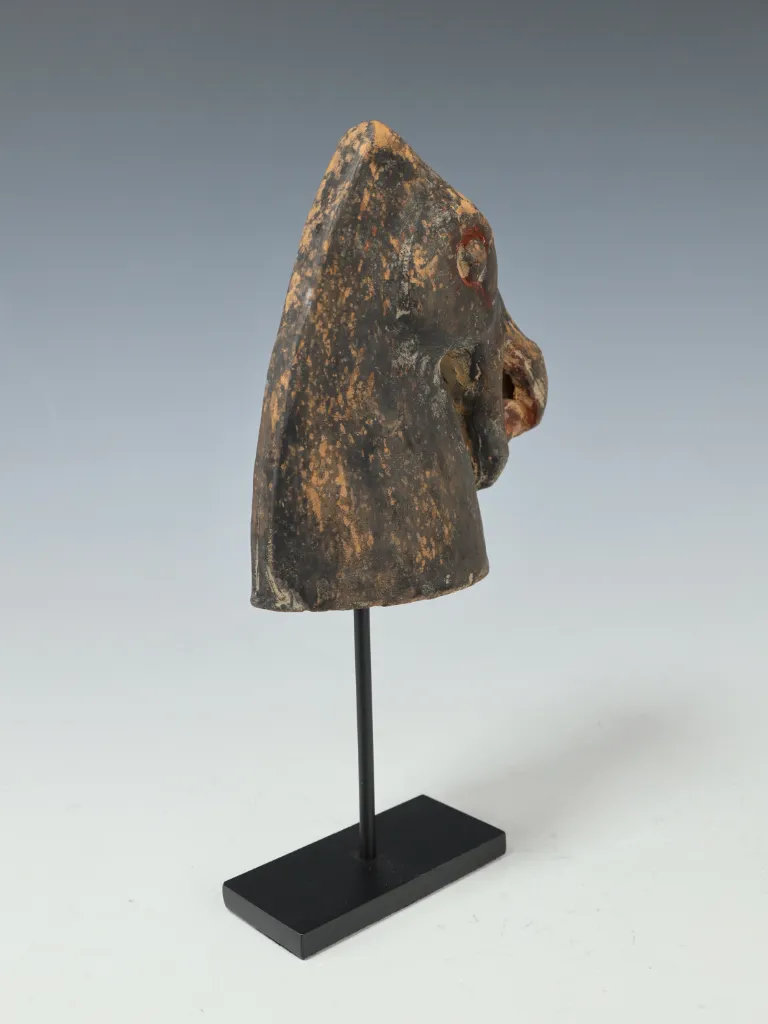
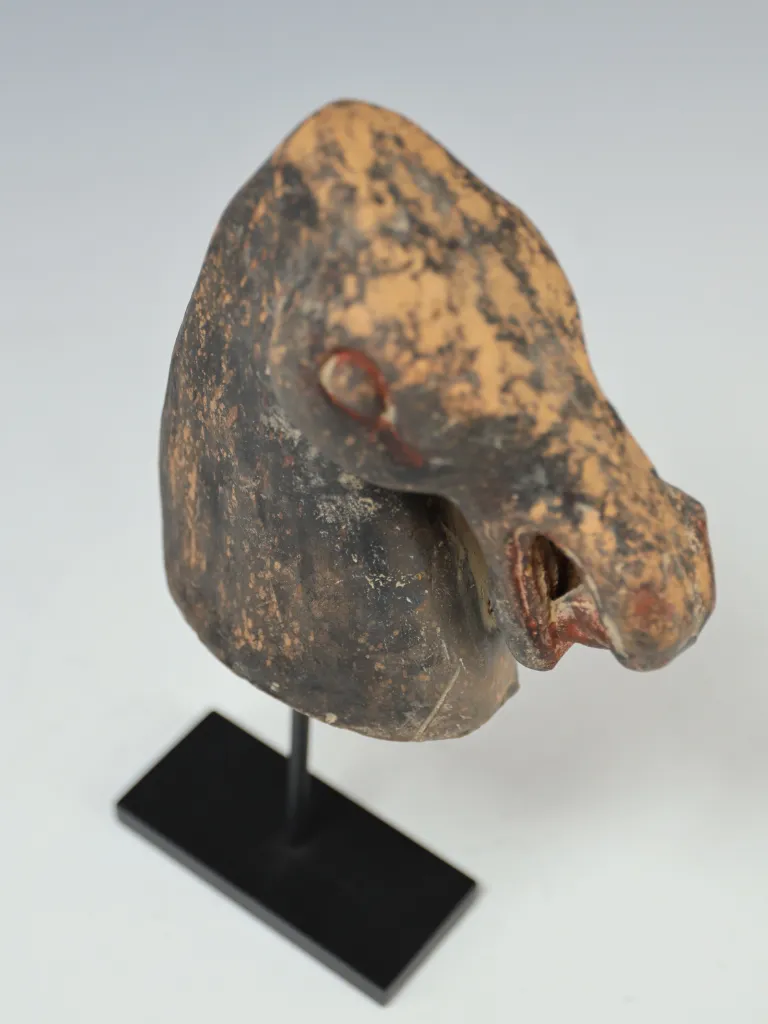
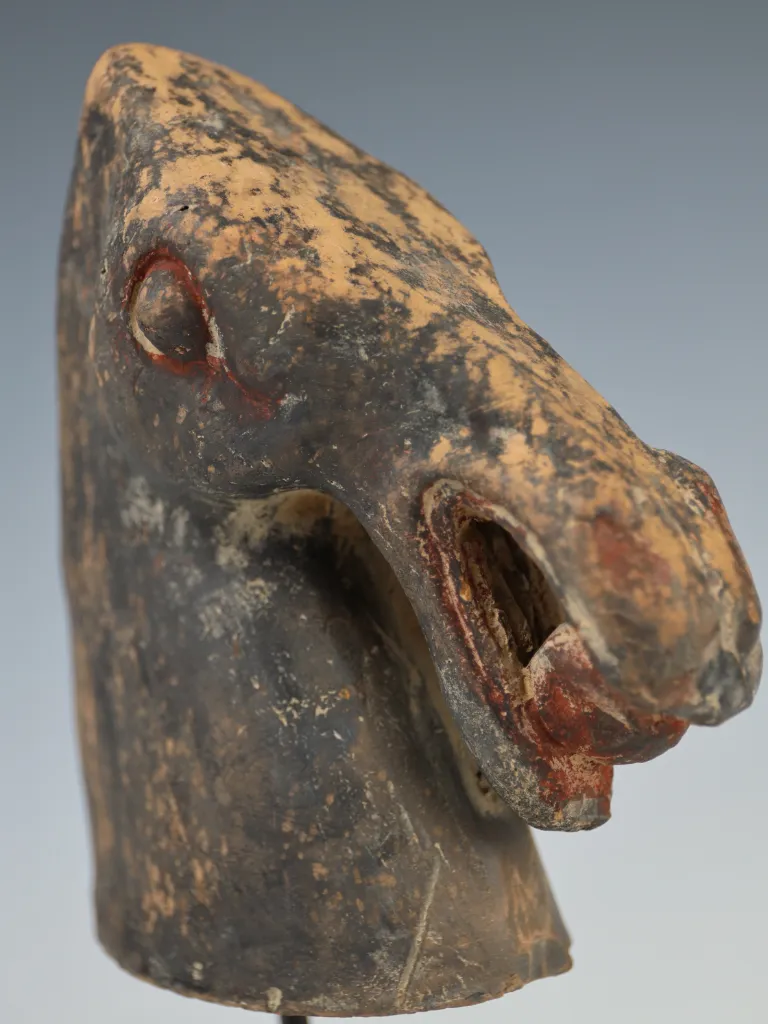
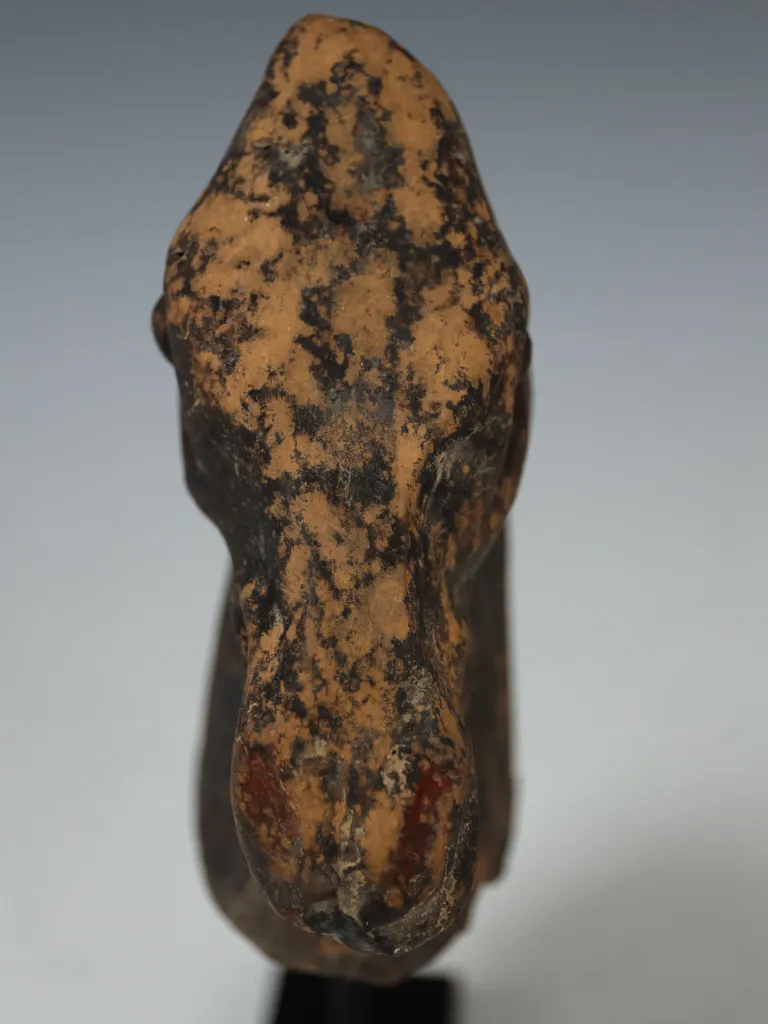
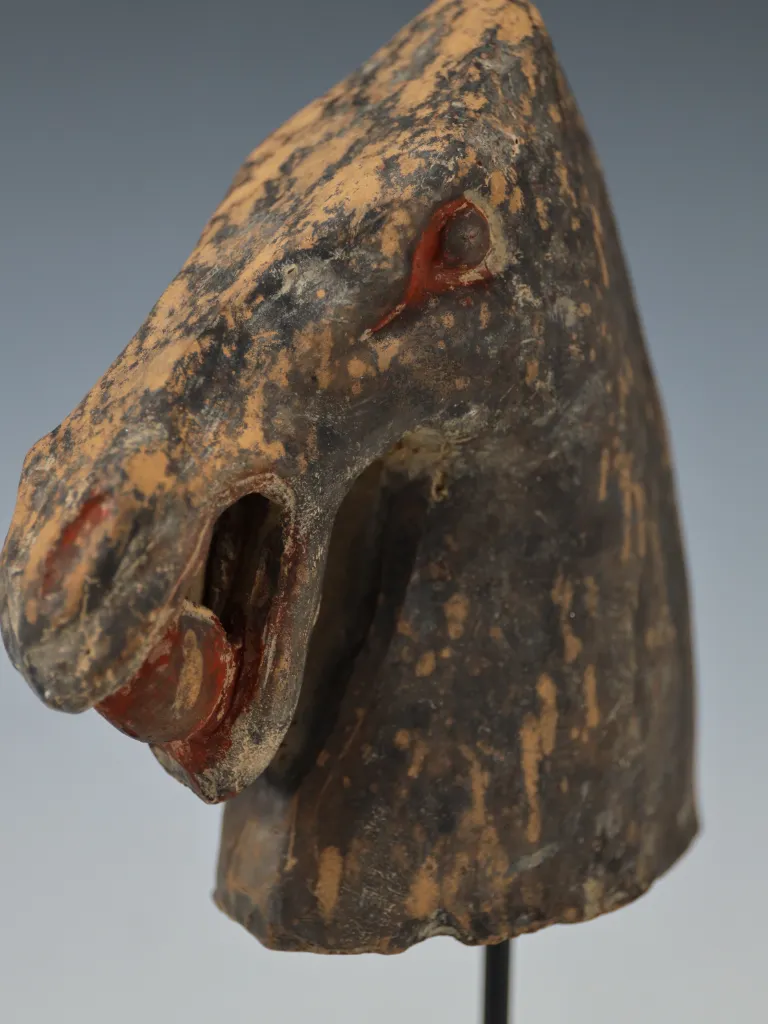
The horse is powerfully modelled with an elongated head, pronounced muzzle and dramatically open mouth. The bold, simplified treatment gives the piece considerable presence, while its surviving surface of charcoal-grey, earthy ochre and traces of deep red pigment creates a beautifully time-worn appearance.
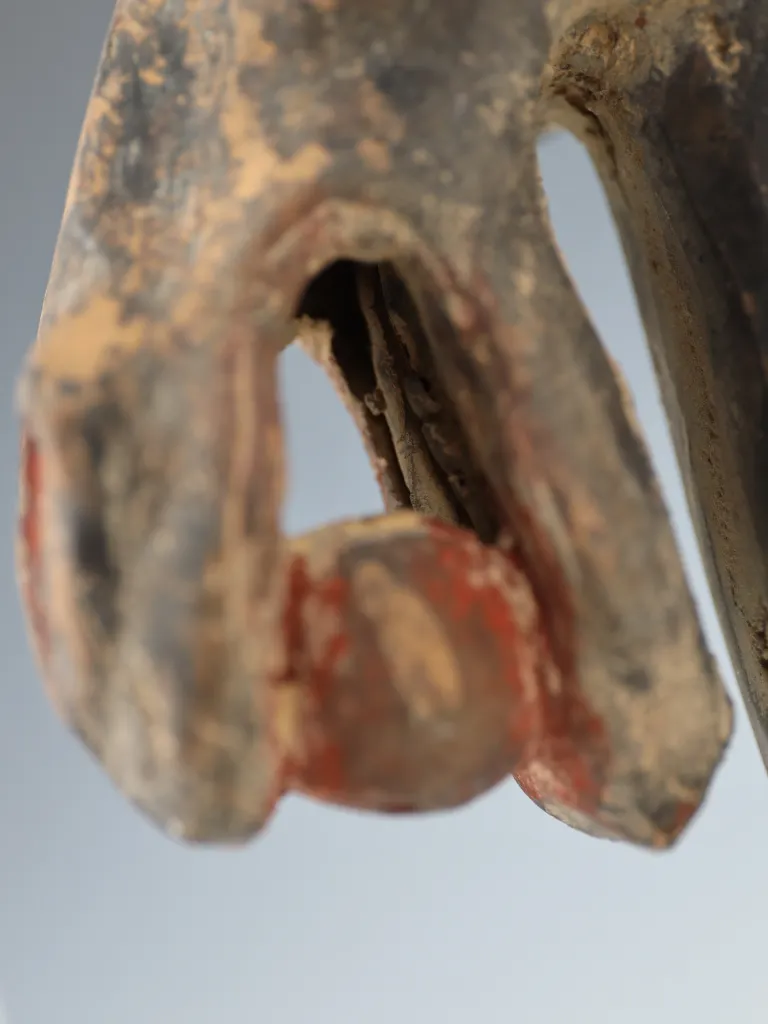
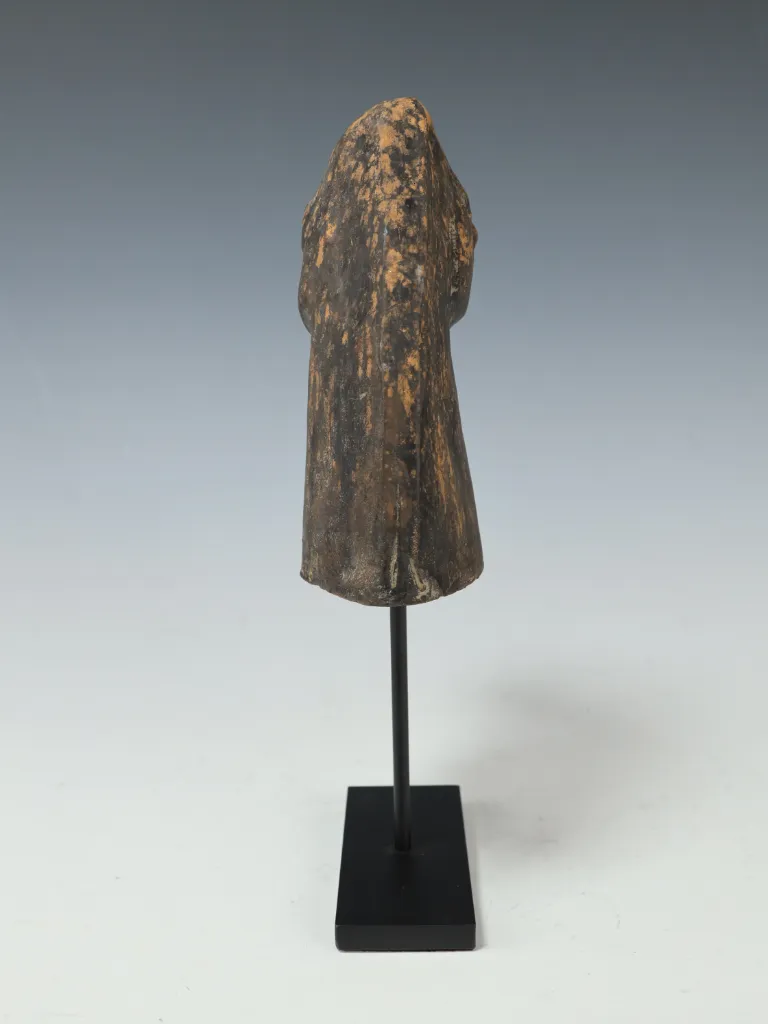
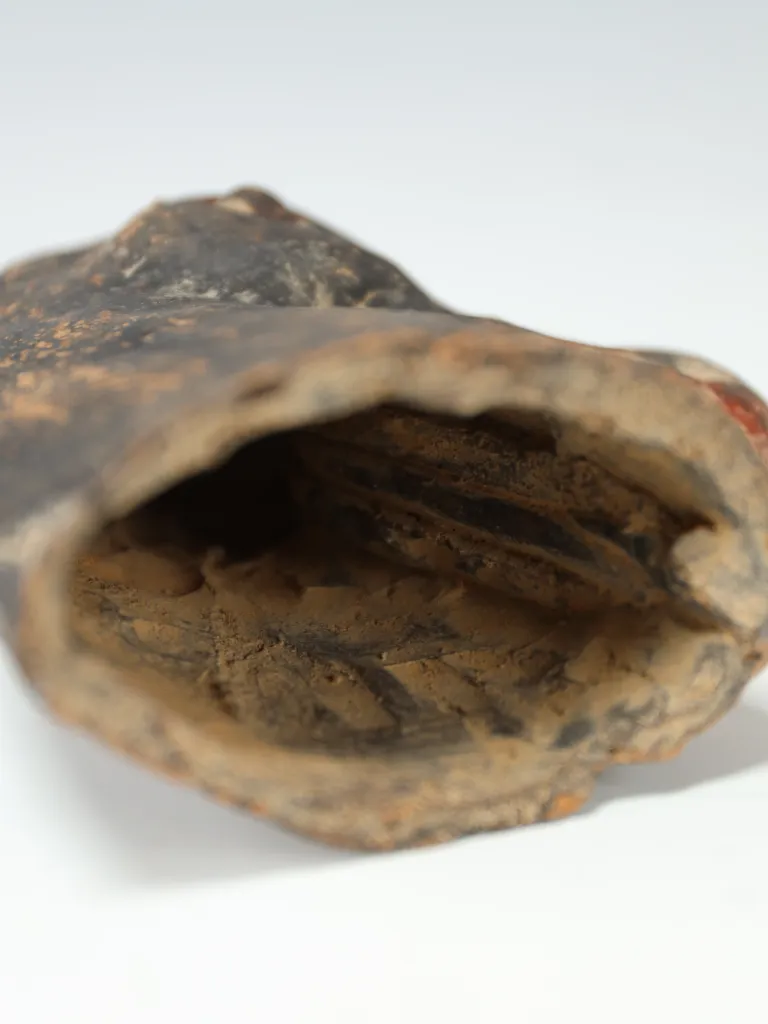
Originally forming part of a larger horse figure, the head is hollow and was made as a separate component. The open underside reveals the hand-worked interior of the terracotta and provides an intriguing insight into its original construction.
Mounted independently, the fragment has an almost Modernist sculptural quality, making it equally successful as an archaeological object and as a striking piece of decorative sculpture.
The head has been strongly and economically modelled, with the principal features deliberately exaggerated to give the animal an animated character.
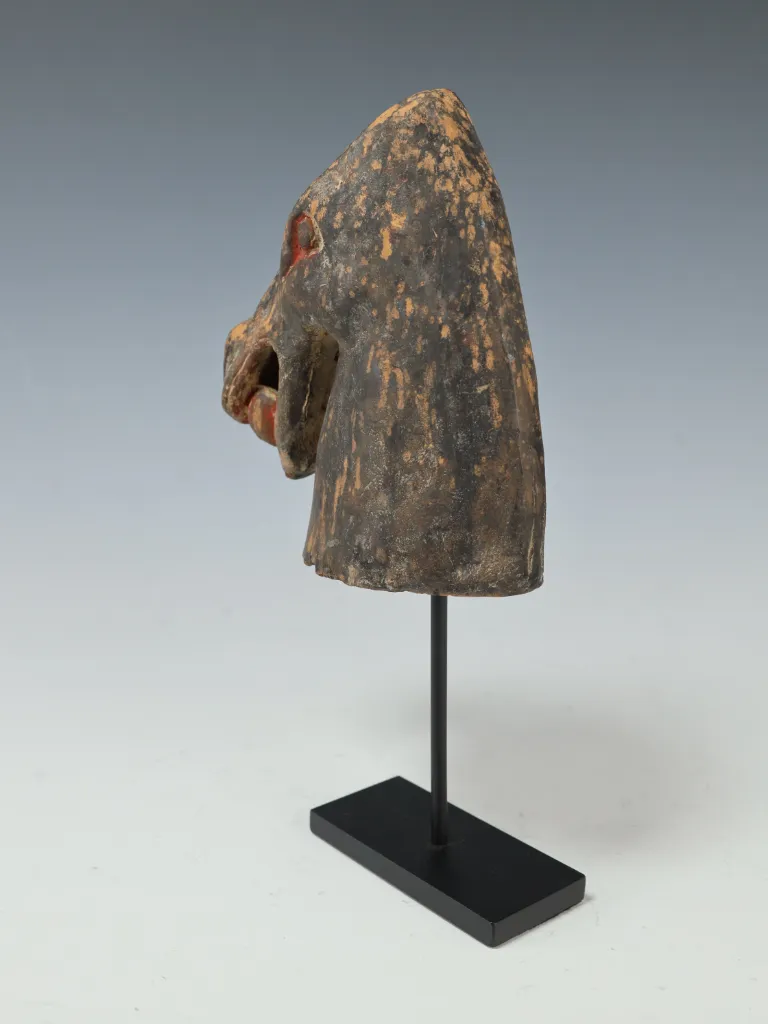
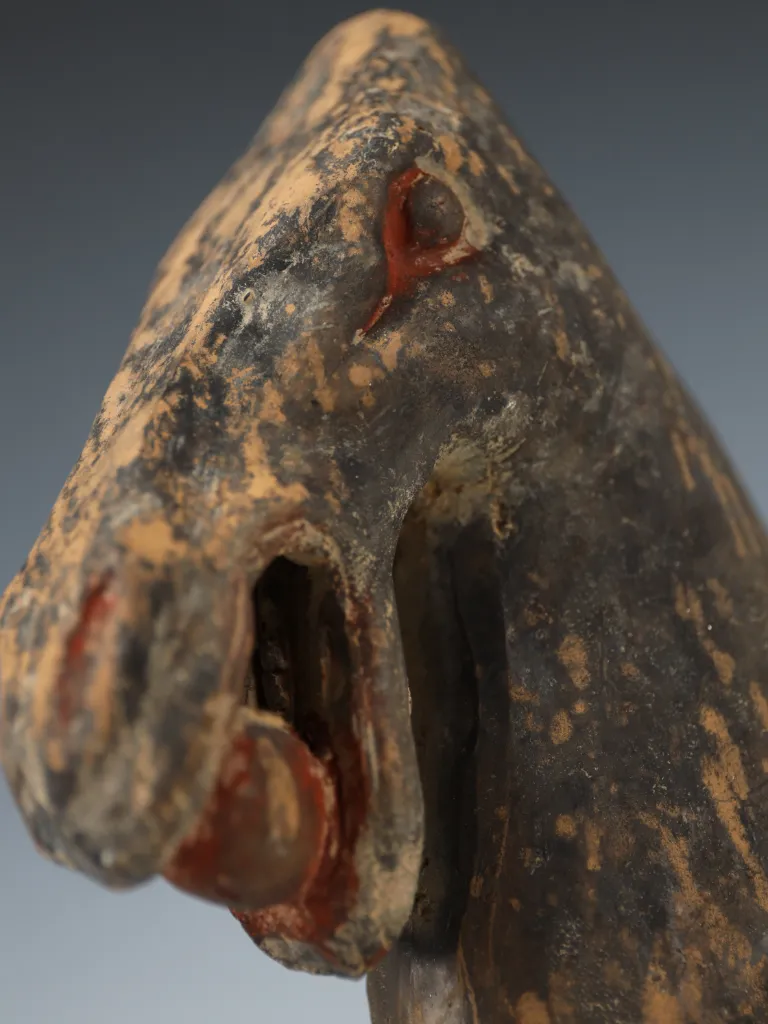
The long tapering forehead sweeps forward into a substantial muzzle, while the mouth is modelled open with a pronounced lower jaw. Deep openings within the mouth and around the muzzle create areas of shadow and give the sculpture considerable depth when viewed from different angles.
The eyes are formed as raised circular elements and retain traces of reddish pigment, echoed around the mouth and muzzle.
Viewed in profile, the strong curvature of the jaw and elongated silhouette give the head an exceptionally sculptural appearance.
The open underside reveals that the head was hollow-modelled in terracotta and originally formed part of a larger horse figure.
Composite construction was employed in early Chinese funerary sculpture. Surviving Han-period ceramic horses demonstrate that separately formed components could be assembled to create the complete animal, with some documented examples originally incorporating wooden elements. The Metropolitan Museum of Art, for example, records a Han pottery cavalry horse whose missing legs were originally made from wood.
The precise construction of the remainder of this particular horse is no longer known, but the surviving head clearly represents one component of a substantially larger figure.
Horses held considerable importance in ancient China, associated with status, transport, military power and prestige.
During the Han Dynasty, representations of horses became an important element of funerary art. Ceramic figures were among the objects known as mingqi — objects placed within tombs to symbolically provide for the deceased in the afterlife.
The Metropolitan Museum of Art holds a comparable Han Dynasty terracotta horse head dated 206 BC–220 AD, classified as tomb pottery. Its survival as an individual head also illustrates how fragments from originally much larger ceramic horses can exist independently today.
The tradition continued beyond the Han period, with painted ceramic horse heads also known from subsequent centuries of Chinese funerary sculpture.
Particularly attractive is the survival of the sculpture's richly aged polychrome surface.
The head has a predominantly dark charcoal-grey appearance, irregularly interspersed with warm ochre and earthy terracotta tones.
More concentrated traces of deep red pigment remain around the eyes, nostrils and mouth, drawing attention to the animal's principal facial features.
The decoration has become extensively worn and fragmented over time, leaving an irregular layered surface in which areas of the underlying terracotta are exposed.
The combination of darkened surface, ochre colouring and remaining red decoration gives the piece exceptional depth and archaeological character.
The horse head is presented on a new bespoke black metal display stand, made specifically for the sculpture.
A slender upright support rises from a restrained rectangular base, allowing the head to appear almost suspended while providing a stable means of displaying the fragment.
The simplicity of the black metal stand provides a deliberate contrast to the heavily textured terracotta and allows the original sculpture to remain the visual focus.
The stand is contemporary and included with the sculpture.
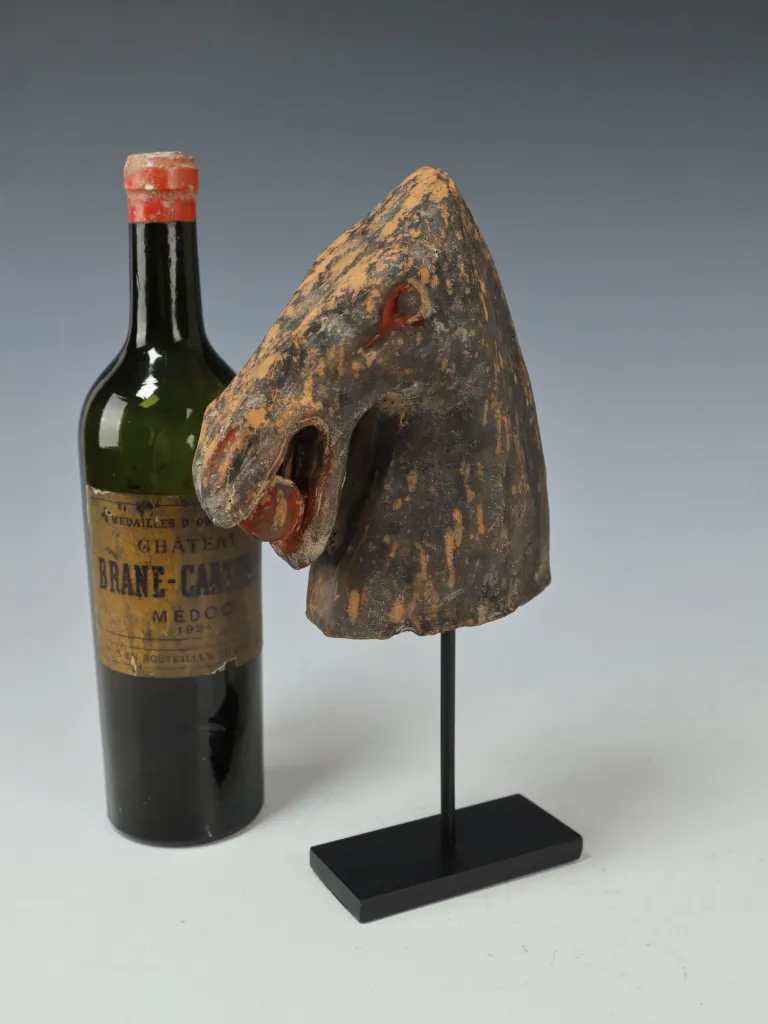
The complete piece stands approximately 30 cm / 11.8 inches high when displayed.
Presented in fragmentary condition, consistent with its character as a surviving component from a larger terracotta figure.
There is extensive age-related surface wear, abrasion, deposits and loss to the original decoration. The ears are absent, and there are historic losses and irregularities around the mouth, lower edge and other exposed areas.
The hollow construction remains clearly visible through the underside and openings within the mouth.
Despite the extensive surface wear, considerable traces of the original dark, ochre and red decoration remain, particularly around the facial features.
The sculpture has not been cosmetically over-restored, allowing the irregularities and surviving surface to remain an integral part of its character.
A new bespoke metal stand has been made specifically to support and display the fragment.
Please refer closely to the detailed photographs, which form an integral part of the condition report.
Mounted independently, the horse head becomes an exceptionally striking piece of ancient-inspired sculptural decoration.
Its bold silhouette, expressive open mouth and deeply textured surface allow it to work particularly successfully within a collected interior, where archaeological fragments can be combined with antique furniture, paintings and contemporary works of art.
Despite its compact dimensions, the head has considerable presence and would make an unusual addition to a library, study, entrance hall, console, pedestal or cabinet of curiosities.
The minimal black stand gives the piece a particularly contemporary presentation while retaining the character of the original terracotta.
Horse Head — excluding stand
Height: 17 cm / 6.7 inches
Width: 19 cm / 7.5 inches
Depth: 16 cm / 6.3 inches
Weight: 7 kg / 15.4 lbs
Including Stand
Overall Height: 30 cm / 11.8 inches
Every item offered by Shackleton Fox is carefully inspected, prepared, and where necessary conserved within our workshop prior to sale.
As heritage craftsmen and antique specialists, we believe in preserving the authenticity and integrity of each piece. Original finishes, patina, wear, and signs of age are retained wherever possible, as these elements contribute to both character and historical significance.
When restoration, rewiring, repairs, or conservation work is required, it is undertaken sympathetically using traditional techniques and materials appropriate to the period of the piece. Our philosophy is one of careful stewardship rather than unnecessary restoration, ensuring antiques remain both functional and historically respectful.
The result is a collection of pieces that have been thoughtfully prepared, allowing future owners to enjoy them with confidence while preserving their unique story and character.