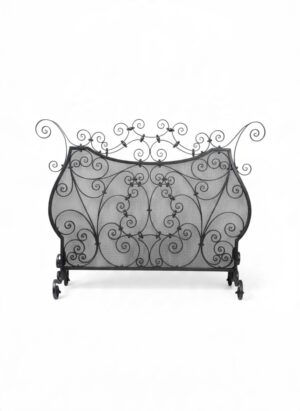
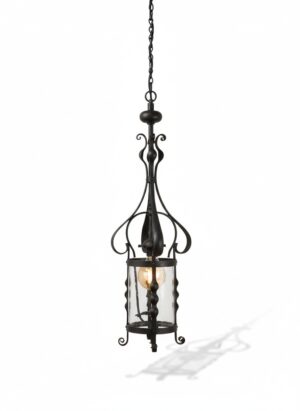
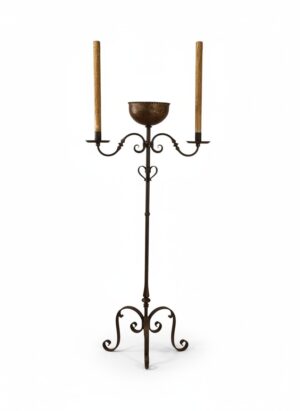
Scrollwork is ornament based on a spiral or rolled curve resembling a partly unrolled scroll of parchment. It appears in carved wood, cast and wrought metal, plasterwork, stone, inlay and printed decoration, either as a single C or S scroll or as a continuous pattern of linked curves, often combined with foliage such as acanthus.
The motif descends from classical architecture, most obviously in the volutes of the Ionic capital and the scrolled console bracket, and was used freely through the Renaissance and Baroque periods. In English furniture, scrolls appear in the carved arms and feet of late seventeenth-century chairs, the broken scroll pediments of Georgian bookcases and clock cases, and the exuberant C-scrolls of mid-eighteenth-century Rococo mirrors and girandoles. Regency makers favoured bold scroll arms on sofas and scrolled ends on chaises longues, while Victorian wrought ironwork for gates, balconies and garden furniture made extensive use of scrolling bars. Collectors judge scrollwork by the fluency of the curves, the depth and crispness of carving, and whether the ornament is original or a later embellishment. Well-carved scroll detail adds movement and richness to otherwise plain architectural forms.