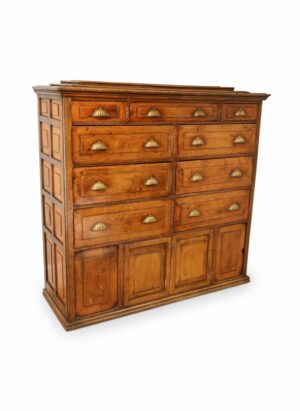
Seventeenth century furniture is furniture made between 1600 and 1700, a century in which English design moved from the solid oak forms of the Jacobean period to the fashionable walnut and veneered furniture of the William and Mary period. It spans the reigns of James I, Charles I, the Commonwealth, Charles II, James II and William and Mary.
In the first half of the century, most English furniture was made of oak by joiners using pegged mortise-and-tenon construction. Typical pieces include joined stools, coffers, court cupboards, press cupboards, refectory tables, gateleg tables and panelled wainscot chairs, decorated with carved lunettes, strapwork, guilloche and turned bulbous supports. Commonwealth furniture tended to be plainer. After the Restoration of 1660, court taste brought continental influence, with walnut veneers, floral and seaweed marquetry, japanning, spiral turned legs, caned chairs and early chests of drawers on stands. Genuine seventeenth-century oak should show deep, even colour, a rich patina, natural wear in the right places and hand-worked timber. Collectors should be cautious of later carving added to plain pieces, a common Victorian practice. Good early oak suits both period houses and pared-back modern interiors.