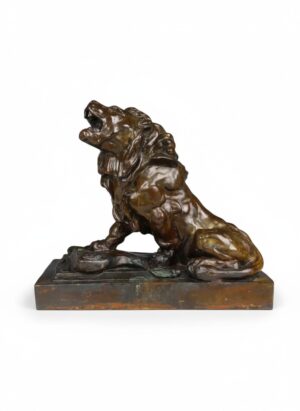
Lost-wax casting, also known by the French term cire perdue, is a method of casting metal in which a model is made in wax, encased in a heat-resistant mould and then heated so that the wax melts and runs out. Molten metal, usually bronze, silver or gold, is poured into the cavity left behind, reproducing the model in fine detail.
The technique is among the oldest metalworking methods and was used in ancient Egypt, Greece, China and Africa for sculpture, vessels and jewellery. It was revived in Renaissance Italy for bronze sculpture and has been used by fine art foundries ever since. In nineteenth-century France, foundries producing works by the animaliers and other sculptors used both lost-wax and sand casting, and lost-wax casts were often specially marked as cire perdue. Because the mould is destroyed in the process, each lost-wax cast is in a sense unique, and the method captures subtle surface texture and undercutting. Collectors examine casting quality, chasing, patination and foundry marks, and those buying bronze sculpture should distinguish authorised lifetime casts from later posthumous or unauthorised casts, which are generally less valuable.