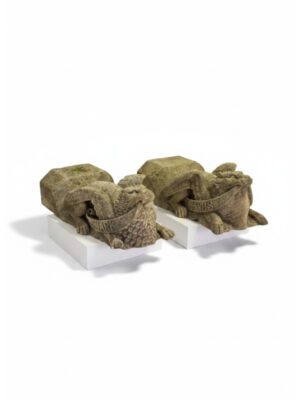
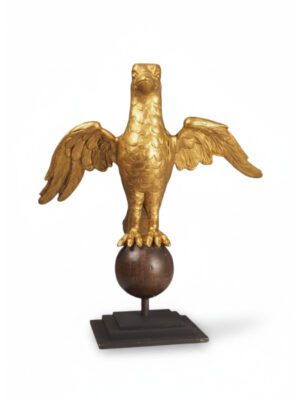
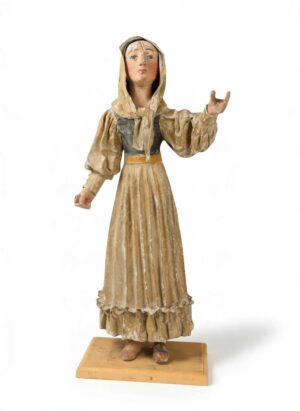
Relief carving is a form of carving in which the design projects from a flat background, rather than being fully freestanding. It is described as low relief, or bas-relief, where the design stands only slightly proud of the ground, and high relief, where figures and ornament are deeply undercut and stand out boldly.
Relief carving has been used since antiquity in stone, wood, ivory, shell and other materials, from classical friezes and medieval church screens to Renaissance chests and cabinet doors. In English furniture it appears on Tudor and Jacobean oak chests, panels and court cupboards, often with strapwork, lunettes, foliage and linenfold motifs. Georgian cabinetmakers used relief carving on friezes, chair rails and mirror frames, while Victorian carvers produced elaborate relief panels in revival styles. Stone relief carving decorated chimneypieces, tympana and memorials. When judging relief carving, collectors look for crisp detail, depth and a sense of movement, together with the gentle wear and patina that indicate age. Later carving on earlier plain pieces is a common alteration, revealed by sharp, fresh surfaces and decoration that cuts across the original structure or proportions.