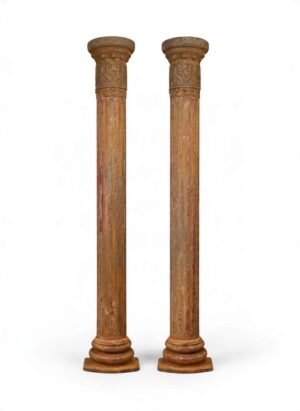
Crown moulding is the term, used especially in North America and in the furniture trade, for the uppermost decorative moulding that finishes the top of a wall, a cabinet or a piece of case furniture. In British architectural usage the equivalent feature on a room is usually called a cornice, while on furniture the terms crown, cornice and top moulding are used fairly interchangeably.
On furniture, the crown moulding projects forward from the carcase of bookcases, wardrobes, linen presses, dressers and display cabinets, giving a strong silhouette and concealing the dust board. Georgian cabinetmakers drew their profiles from classical architecture, combining coves, ogees, beads and dentils, while Victorian makers often produced heavier or more elaborate versions. Crown mouldings are often detachable, and they can easily become separated, damaged or replaced over time, so it is worth checking that timber, colour and construction match the rest of the piece. A replaced or reduced crown can alter the proportions of a bookcase significantly. In interiors, painted timber or plaster crown moulding remains a simple way to give a plain room a more finished, architectural character.