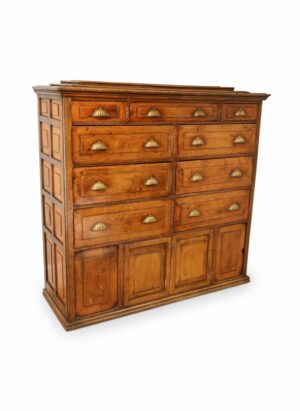
Decorative veneers are thin sheets of wood selected for their attractive colour, figure or grain and glued onto a solid carcase to create a beautiful surface on furniture, boxes, clock cases and panelling. They allow rare and visually striking timbers, such as burr walnut, flame mahogany, satinwood, rosewood, amboyna and bird's eye maple, to be used economically and arranged in patterns impossible to achieve in solid wood.
Veneering became widespread in England after the Restoration of 1660, when walnut furniture with oyster, quartered and crossbanded veneers came into fashion under continental influence. Early veneers were hand-sawn and relatively thick; nineteenth-century mechanical saws and later rotary and slicing machines produced much thinner leaves. Book-matching, quarter-matching, crossbanding, feather banding and stringing were all used to frame and enhance the figure. Collectors judge decorative veneers by the quality and colour of the timber, the skill of the matching, the survival of original surfaces and the absence of lifting, cracking or poorly patched areas. Some lifting and minor loss is normal in old furniture and can be stabilised by a restorer using traditional animal glue.