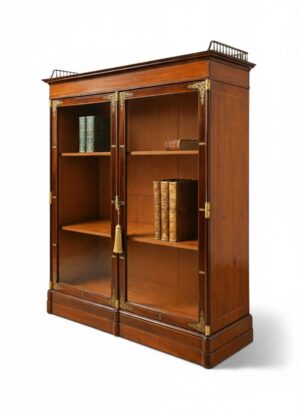
Exotic hardwoods are dense, decorative timbers from tropical and subtropical regions, prized for their colour, figure, hardness and ability to take a high polish. Examples used in antique furniture include mahogany, rosewood, ebony, satinwood, kingwood, tulipwood, amboyna, zebrawood, coromandel, padouk and calamander.
British furniture makers began using exotic hardwoods in quantity in the eighteenth century, as trade with the Caribbean, Central and South America, India and Southeast Asia expanded. Mahogany from the West Indies transformed English cabinetmaking from the 1720s onwards, while satinwood became fashionable for Neoclassical furniture in the later eighteenth century. Rosewood and coromandel were favoured in the Regency and Victorian periods for veneers, crossbanding and boxes, and ebony was widely used for inlay and stringing. Today many species are protected under CITES, and Brazilian rosewood in particular is subject to strict controls on trade, so antique pieces may require documentation when sold or exported. Collectors judge exotic hardwoods by the richness of colour, quality of figure and survival of original surfaces, and they often provide the visual impact that distinguishes a fine piece of furniture from a merely competent one.