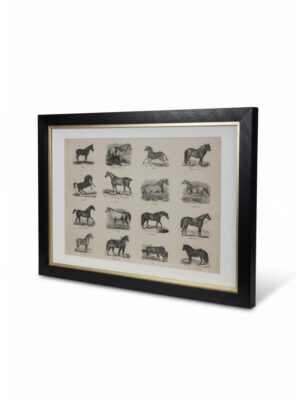
Historical prints are images produced by traditional printmaking processes in past centuries, including woodcuts, line engravings, etchings, mezzotints, aquatints and lithographs. They range from fine artists' prints to maps, topographical views, portraits, satirical caricatures, botanical and natural history plates, and illustrations taken from books and periodicals.
Before photography, prints were the main means of reproducing and circulating images, and they record architecture, fashion, events and personalities in remarkable detail. Eighteenth- and early nineteenth-century English prints after painters such as Reynolds and Stubbs, sporting prints, and hand-coloured plates are especially popular for decoration. Collectors look at the impression, which should be sharp and rich rather than worn, the margins, any plate mark, original or later colouring, and the state of the paper. Foxing, staining, trimming and fading from light all reduce value, and many prints on the market are later restrikes or photographic reproductions, which can usually be identified under magnification. Well-framed historical prints, hung in groups or sets, remain one of the most effective and affordable ways to bring period character to libraries, halls and staircases.